
Low-carbon hydrogen: the energy of the future

Setting course for hydrogen
By caroline Mazzoleni,
Head of hydrogen business at Equans

Low-carbon hydrogen, a versatile energy source
Over the last ten years or so, a surprising energy source has become a topic of discussion when it comes to the energy of the future. It's low-carbonhydrogen , also known as renewable or green hydrogen. By the way, what is hydrogen and how is it obtained? To find out, we spoke toCaroline, , head of hydrogen activities at Equans.
What is hydrogen and how is it obtained?
Hydrogen is an energy carrier that can be produced in different ways from fossil fuels. In most cases, but also from renewable or low-carbon energies, and specifically from water electrolysis.
It's very simple: we take H2O water molecules, we circulate an electric current and we break these water molecules to recover hydrogen gas on one side, which is an energy carrier dedicated to the decarbonization of various activities, and oxygen on the other.
Hydrogen's potential has been immense for many years now, and Equans has seized this opportunity, particularly in the transformation of industry. How did this solution come about at Equans?
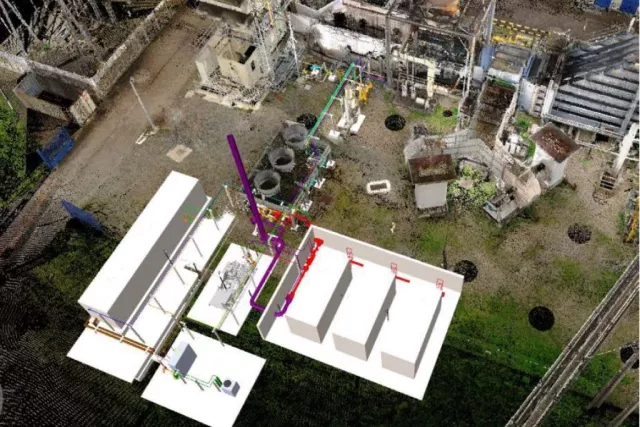
At Equans, we are determined to position ourselves as a leader in the energy transition, and so we support our customers in the transition of their activities, particularly in reinventing and enabling industry to survive with innovative solutions.
Hydrogen is an energy vector that will enable industry to find low-carbon solutions that are essential to the sustainability of its activities. We want to support our customers with these solutions and be able to deploy them in their services as quickly as possible. This is how the hydrogen business was born within Equans, with the aim of building on the Bouygues Group's long-standing position in the production of renewable energies, particularly solar and wind power.
Whether in transport, industry or energy production, does hydrogen offer promising solutions to climate challenges?
I was quite surprised at how quickly people acculturated to this new energy. We also need to adapt a whole regulatory and safety framework, because we're using an energy that has traditionally been used in industry with a framework and people who were trained and seasoned in this type of use, and now being able to fill up your hydrogen vehicle means that vehicle use has to evolve. I'm quite fascinated by the ability of the whole industry to adapt, and that requires us all to work together with an ecosystem of partners who are working towards the emergence of this sector, and I'm quite fascinated by that.
Maurice Blondel used to say that the future can't be predicted, it has to be prepared

How can low-carbon hydrogen production contribute to decarbonizing industry, and what are its other potential uses, such as in heavy-duty vehicle fleets and the storage of surplus renewable electricity?
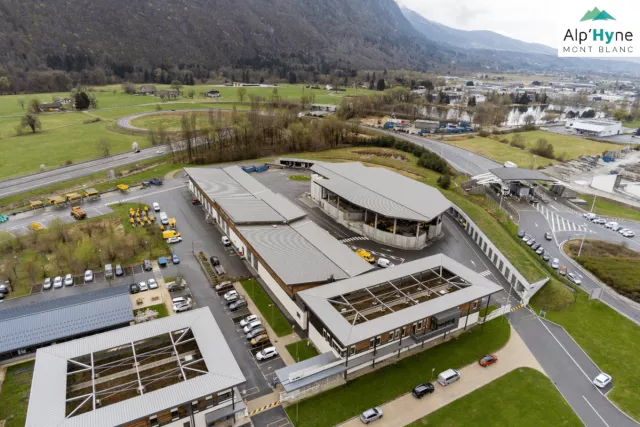
Hydrogen is used to decarbonize activities such as industry and mobility, but also as a flexibility vector to compensate for the intermittent nature of renewable energies.
Today, more and more attempts are being made to integrate renewable energies into the energy mix. The problem with these renewable energies is that they are intermittent. The challenge is to store them. And we can't store them in batteries, because they are dedicated to short-term storage.
Hydrogen can be used as a long-term energy storage vector, so it can be stored for very long periods - weeks, months - without any loss of energy, and then restored through what are known as hydrogen fuel cells, to be reused as and when required.
Will tomorrow's trucks, buses and maybe even planes and ships run on hydrogen?
Hydrogen is seen as a decarbonization vector for mobility in general, and therefore more for large vehicles, for which battery-powered vehicles are not compatible for reasons of power requirements.
We're talking about trucks and buses, but also other types of mobility requiring decarbonization. This is the case, for example, of the maritime sector, but also of aviation, which cannot use gaseous hydrogen for the simple reasons of maintaining gaseous hydrogen in the atmosphere at high altitude, and also for weight reasons. Instead, hydrogen derivatives such as e-kerosene are used to make e-fuels and alternative fuels.

In the agricultural sector, Equans is working with the Dordogne region on a particularly innovative project to transform agricultural waste into synthetic methane, a gas used to heat our buildings. Tell us more?

The Dordogne is a fairly rural department, which was keen to deploy a hydrogen production and distribution infrastructure for a variety of uses.
The Dordogne is already equipped with a number of methanization plants. These degrade agricultural waste to produce biogas (around 60%) and also CO2. Today, this CO2 is not valorized, so we came up with a very innovative project to combine this CO2 with hydrogen to make synthetic methane and inject it back into the grid.
It affects all the uses to which gas is put through the distribution networks in France, including heating.
Equans works with a major European port to welcome future hydrogen-powered boats
As we can see, hydrogen is destined to be used in quite specific industrial sectors that require a lot of energy, such as the iron and steel industry, fertilizer production, glassmaking and paper mills, but we also need to think about hydrogen supply for these maritime uses.
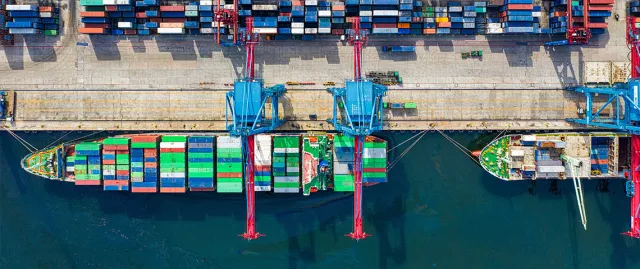
Still with a view to decarbonizing activities, and mobility in particular, Axima, an Equans brand, has positioned itself on a project to decarbonize river mobility, notably at a major European seaport, where the ambition is to design and install infrastructures to refuel the boats that will be navigating the various rivers.
This project is the subject of a European subsidy application, and is therefore one of the pioneering projects in the field of decarbonizing river mobility.

Can we go so far as to imagine a hydrogen-powered rocket?
Today, this is already the case. In aerospace, liquid hydrogen is used extensively. So it's thanks to these cutting-edge technologies, such as rockets in space, that we'll be able to find alternative solutions that are competitive and enable us to address everyday sectors such as aviation and shipping.

Did you know that hydrogen can even be used as fertilizer?
Fertilizers are currently produced using fossil fuels and chemicals. In this case, we're talking about producing fertilizers from hydrogen derivatives, which will help to decarbonize activities such as agriculture. These are the fertilizers of the future, since they will be manufactured using low-carbon energy.

Hydrogen at the Rolling Stones concert in Paris
Today, a large number of diesel generators are used in various sectors. Hydrogen is ultimately a vector that can be used to replace this diesel with electro-hydrogen generators.
We have found cases where it was appropriate to use them, because the carbon footprint is interesting, particularly for intensive use in events.
Last summer, for example, we powered the Solidays festival and the Rolling Stones concert at the Longchamp racecourse, using electro-hydrogen generators and low-carbon hydrogen. The savings in CO2 emissions are extremely significant. These solutions are extremely reliable, and can be replicated on sportingevents, on our construction sites and also on isolated sites not connected to the grid.

Do you have a need? Let's talk about it?
Do you have a need? Let's talk about it?
