14/09/2023
Deciphering the thirty-yearly sprinkler revision in fire safety
A key stage in the life of a sprinkler installation, the thirty-yearly overhaul is a mandatory step to help you remain compliant and, above all, safe.
Our experts, 100% dedicated to supporting your retrofit projects, explain the various stages and where to start.
What is the thirty-yearly overhaul of a fire safety system?
The thirty-yearly overhaul, or retrofit, is a comprehensive process that includes apre-work audit to identify the parts of the installation where action is needed to achieve optimum safety levels.
This process, perfectly described inappendix 3 of APSAD R1, includes an on-site audit, regulatory compliance, hydraulic calculations and sampling. In the APSAD R1 regulations, the term "thirty-year" is used, as the validity period for an N1 certificate of conformity is 30 years.
The process is broken down into 3 phases, which is why we strongly advise you to start taking the first steps from the 25th year onwards. Throughout the process, we provide our customers with a specialized technical expert, a dedicated business manager and our design office.
This review process can also be adapted for sprinkler installations based on other standards such as FM, NFPA, NFEN.
Testimonial :

“ Axima's experience in sprinkler-based fire protection is a real asset, enabling us to provide our customers with effective, coherent technical solutions that can be applied in the field. Customer feedback has been good and positive, in line with both customer expectations and our own (on the insurance side). ”

What are the stages in the thirty-year review process?
Phase 1: Site visit and feasibility study
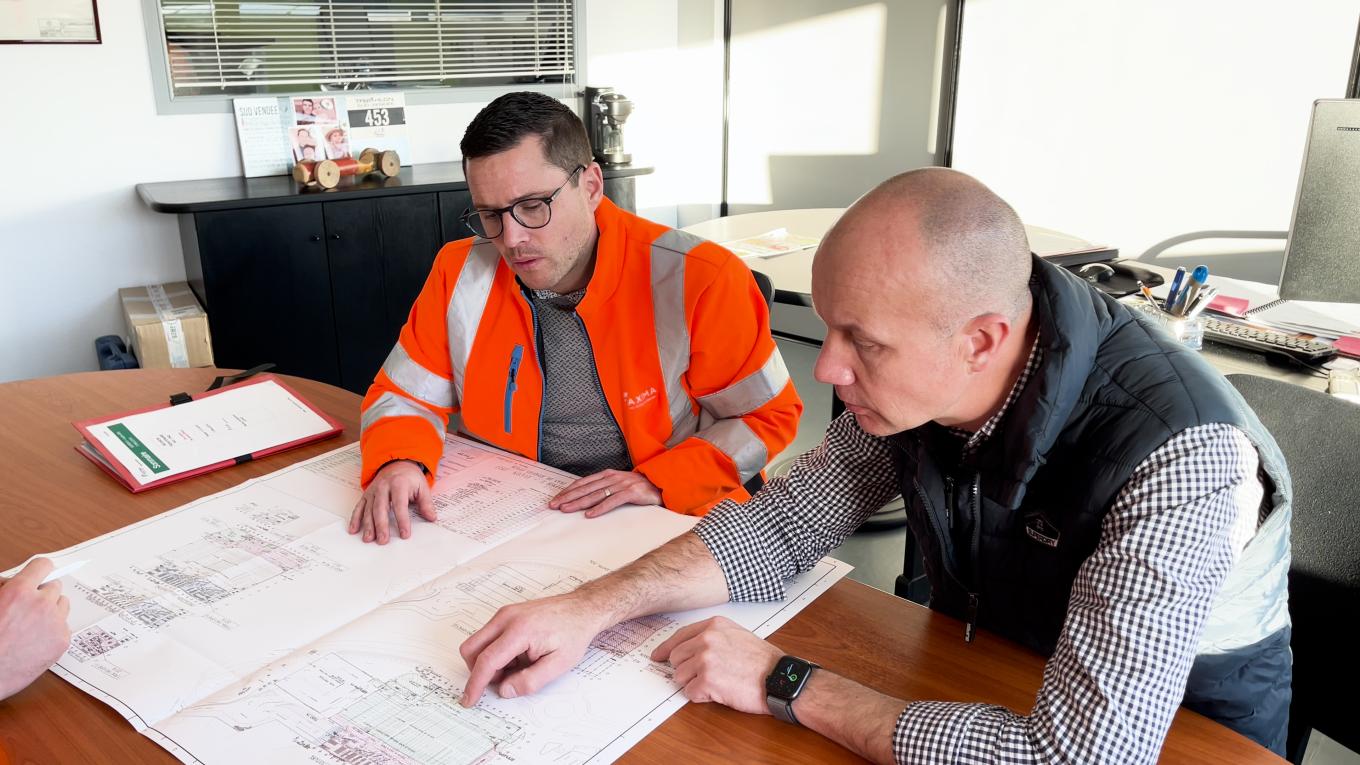
The first stage of the process (phase 1) is the site visit and feasibility study. An analysis of the site is carried out by means of a visual audit of the existing installation, the aim of which is to establish the risk classification according to the activity (and to determine the appropriate protection), as well as the identification of one or more parts of the site which are potentially incompatible or which require specific adjustments.

Phase 2: Detailed investigations
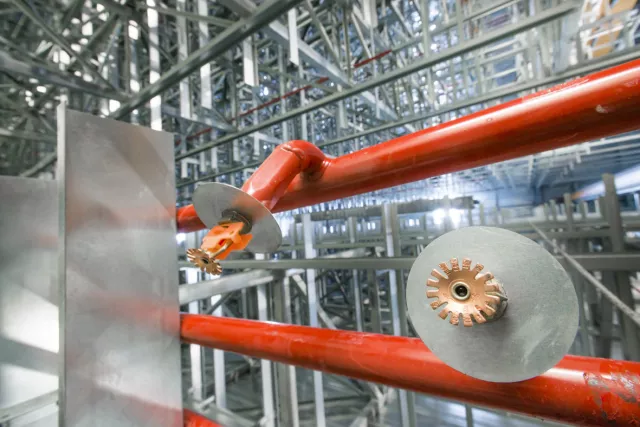
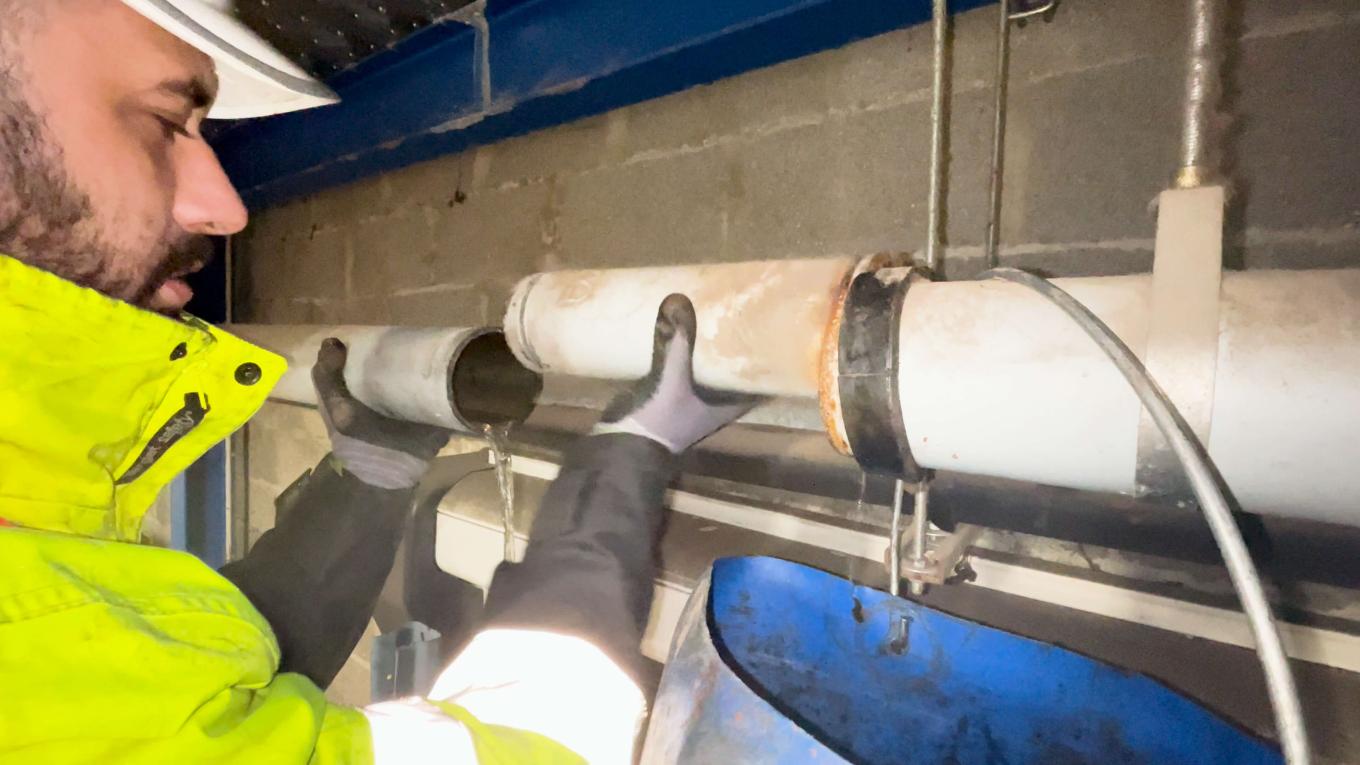
The second stage, otherwise known as "phase 2", is the more operational part. Hydraulic calculations will be carried out on the basis of the risks identified in phase 1, as well as checks on the condition of piping and sprinklers (carried out by sampling, ultrasonic measurement, endoscopy for piping, measurement of trigger temperatures, coefficient k for sprinklers) to ascertain their condition and the need, or otherwise, to replace them.
These analyses are carried out by an independent laboratory, and the results are presented to our customer in the form of an expert report proposing several scenarios for bringing the relevant parts of the site back into compliance (with or without work).
This entire phase is carried out in close collaboration with the customer and his insurer, so that he can choose to adapt his installation to the needs of the site, or vice versa.
Phase 3: Costed proposal and completion of work
In phase 3, depending on the scenarios selected by our customer, a technical and financial brief committing us to carrying out the work is presented to the customer (the presence of the customer's insurer is recommended). This costed proposal commits us, as the installer, to assisting the customer in carrying out the work mentioned.
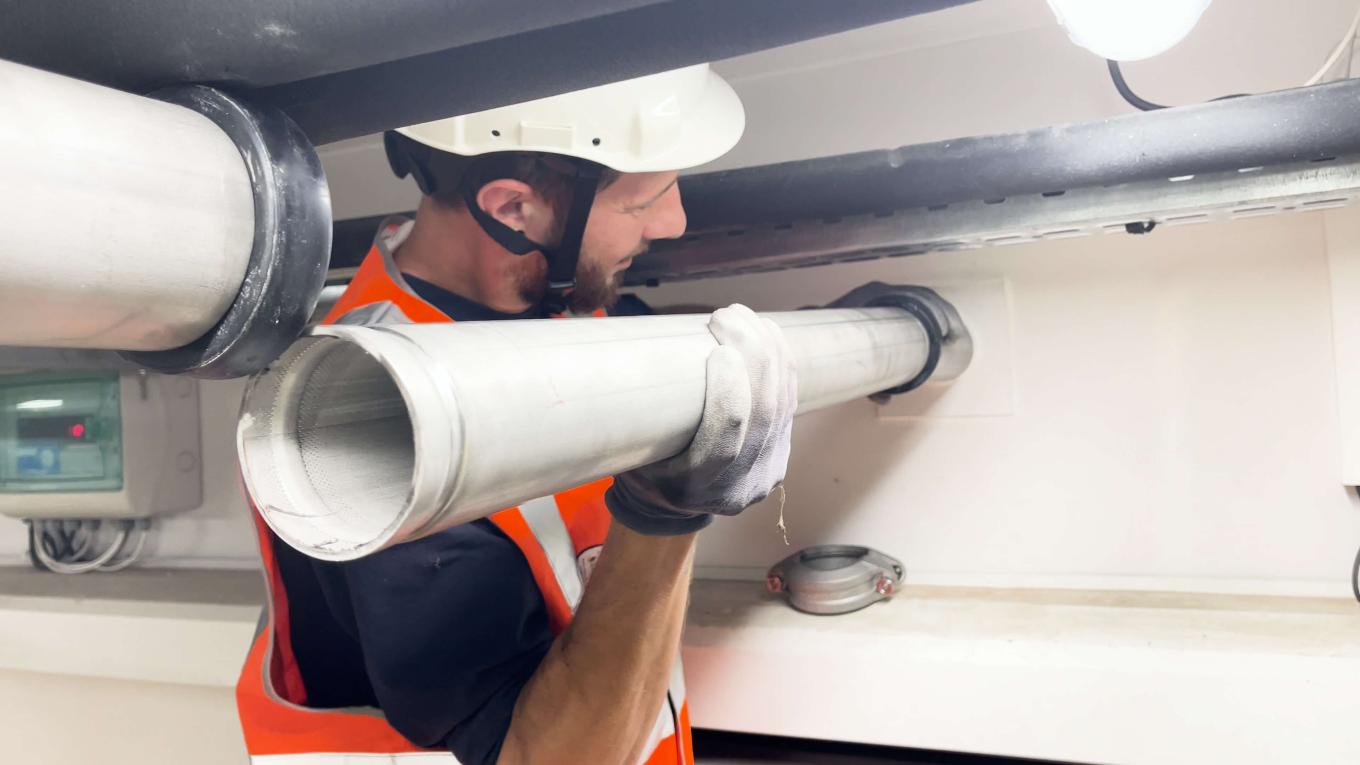
Why should your plant be overhauled before its thirtieth year?
Firstly, to comply with current APSAD R1 standards, and to achieve a revised installation by the thirtieth year. This means taking into account the duration of the audit, as well as the compliance work which, depending on the audit results, may take several years to complete.
Furthermore, statistics show that the risk of fire safety system failure increases after 30 years. Wear and tear caused by the passage of time (e.g. oxidation of pipes) has an impact on the proper functioning of the system, and in the most extreme cases can lead to a triggering fault that prevents water from reaching the fire zone; or, more frequently, simply reduces the effectiveness of the sprinkler heads.
These risks of failure are often compounded by the need to resize networks and flow rates to comply with changing regulations, or to modernize your buildings (or equipment), and sometimes even a change of purpose or use.
Why choose Axima fire safety for a 30-year retrofit rather than an engineering firm?
Unlike a design office, we provide binding specifications that are as accurate as possible in terms of the actual installation constraints for the work to be carried out, both financially and technically. We also provide support for our customers in their dealings with CNPP and their insurers.
As a certified installer, it is our responsibility to ensure, when presenting the phase 2 report, that the proposals presented to the customer and his insurer are technically compliant, that they will be carried out within the proposed budget, and within the deadlines agreed together.