

Cleanrooms: An Optimized Space for Your Production
Cleanrooms: An Optimized Space for Your Production

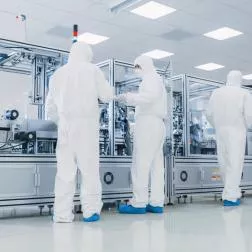
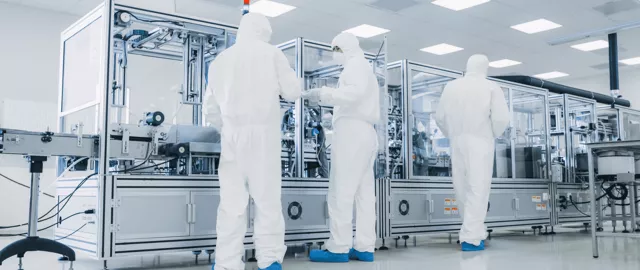
A cleanroom is a controlled-atmosphere room specifically designed for certain industries (food processing, aerospace, pharmaceuticals, etc.) to protect people and the products being handled from potential contamination or interactions with unpurified air.
Equans France, which has specialized in cleanroom construction for over 30 years, explains how these specialized rooms work.
What is a cleanroom?
A cleanroom is an enclosed space in which various environmental criteria are controlled: concentration of airborne particles, humidity, temperature, gas emissions, etc. Fluctuations in these various parameters can damage the equipment being handled, contaminate food or pharmaceutical products, and facilitate the spread of potentially hazardous elements, such as viruses or explosive particles.
In addition to operating rooms, cleanrooms are primarily built in healthcare facilities, as well as in the food processing, microelectronics, pharmaceutical, cosmetics, and biotechnology industries, and in the aerospace sector.
They must comply with ISO 14644-1, which specifies the classification of airborne particle cleanliness in terms of the concentration of airborne particles.
This classification ensures the protection and safety of people working in cleanrooms, as well as the cleanliness and non-contamination of the products handled (cosmetics, food, medical equipment).
Equans France, a cleanroom designer for 30 years
The design of a cleanroom depends on the industry and the criteria to be measured (particle levels, temperature, lighting, etc.).
Equans France, with 30 years of expertise in cleanroom design, plans and builds cleanrooms that meet strict hygiene and safety standards.
From planning to design, from commissioning to maintenance, Equans France is involved at every stage to create cleanrooms that meet the hygiene and safety needs of facilities, in compliance with health standards and regulations.
For over 30 years, Equans France has been supporting you by applying its expertise to protect people, prevent environmental contamination, and avoid product damage.
Our cleanroom and white room solutions


Frequently Asked Questions: Learn More About Cleanrooms
Since we’re talking about “cleanrooms,” who are they intended for, and what needs do they address?
A cleanroom is a confined area in which, thanks to an air-conditioning system, a worker can operate or manufacture a product while minimizing the risk of contamination from dust, microbes, or other harmful microorganisms. For example, it can be used to protect a food or pharmaceutical product throughout the production chain, preserving its contents until it is sealed and stored in an airtight environment. The main sectors involved include electronics and high-tech industries, healthcare, hospitals, biotechnology, the food industry, paint booths, and data centers.
There are nearly as many cleanrooms as there are customers; each is designed to meet specific customer requirements (ISO classes) in order to best address the needs and specific characteristics of its owner. Anhydrous rooms, a variant of cleanrooms, are unique in that they guarantee virtually zero absolute humidity (water content)—one of the essential safety and performance criteria for the electric mobility sector (gigafactory batteries). As a result, they are currently experiencing a real boom!
What are the main challenges associated with air treatment in cleanrooms?
There are many challenges involved, given that cleanrooms are enclosed environments—designed to be airtight, typically pressurized, and consisting of one or more rooms. But the key point to remember is that while cleanrooms require such extraordinary levels of technical expertise and precision, it is because they guarantee both the quality of the final product (whether it be medications, food, or even car batteries) and the health of the people undergoing surgery there, in the case of a hospital operating room! Air treatment in cleanrooms therefore addresses issues of well-being, health, food safety, and sustainable development all at once—hence the passion and professionalism that drive its members.
More specifically, within cleanrooms, the first priority is to control particulate contamination—whether living, inert, or chemical. To prevent external contaminants from polluting the products inside the cleanroom and spreading through the air, the cleanroom is pressurized. Conversely, when contaminants are present inside the cleanroom, the room is depressurized to prevent them from escaping to the outside. All of this is carried out within protected systems, potentially using ventilated suits to contain the operators. In this type of facility, we use a dual-flow ventilation system that relies entirely on fresh air, with special attention paid to trapping contaminants in the exhaust air using single or double BIBO filters. The filters in these BIBO units are regularly replaced, disinfected, and autoclaved.


Do you have a need? Let's talk about it!
Do you have a need? Let's talk about it!
