

Smart, Connected, and Sustainable Street Lighting
LEDs, remote management, and dimming: more energy-efficient and safer street lighting, with energy savings of up to 80 percent.Smart, Connected, and Sustainable Street Lighting
LEDs, remote management, and dimming: more energy-efficient and safer street lighting, with energy savings of up to 80 percent.
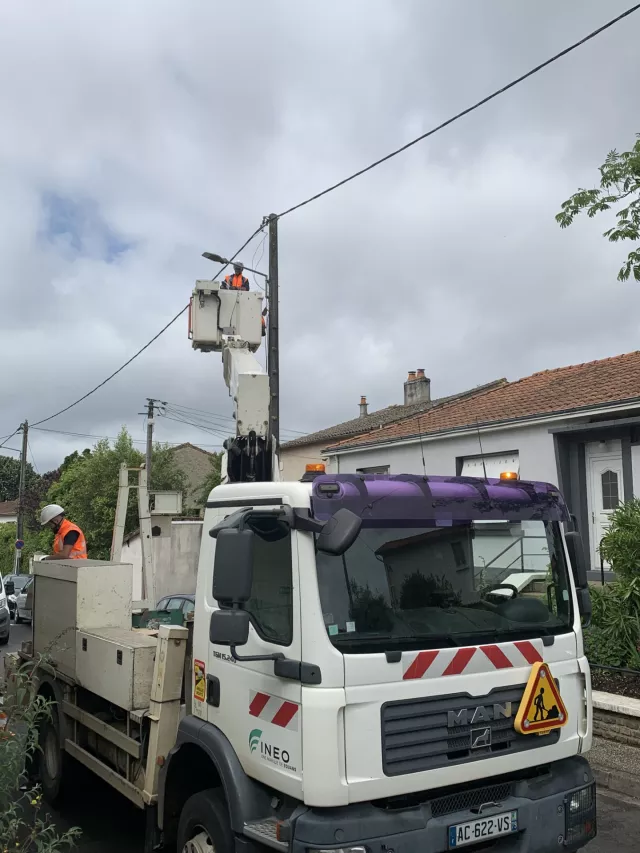
Street lighting is the largest source of electricity consumption for local governments. Today, LED and connected technologies are transforming this challenge into a real opportunity for cost savings and energy efficiency. As a major player in street lighting in France, Equans works with local governments to build high-performance lighting systems and develop customized lighting plans, enabling energy savings of up to 80%. Nearly one million light fixtures have been upgraded and are remotely managed by our experts. Smart urban lighting is a key component of connected communities and helps build more sustainable cities in public spaces.
Is your community's street lighting putting too much of a strain on your electricity bill?
What is smart street lighting?
Street lighting refers to all lighting fixtures installed in public spaces: streets, roads, parks, and plazas. Its purpose is to ensure the safety of pedestrians and drivers while creating a comfortable environment for users. What makes it smart is the integration of sensors, remote management systems, and solutions for adjusting light intensity. Nighttime lighting adapts in real time to the presence of people, schedules, and weather conditions.
The essential components of smart street lighting include LED streetlights, lamp posts equipped with motion sensors, and connected control cabinets. These lighting systems allow for remote control of each light fixture and enable light levels to be adjusted precisely as needed. Thanks to remote management technologies, you can optimize energy consumption and detect outages instantly. The result: you reduce your energy bill, improve pedestrian safety, and limit light pollution. It is also an asset for mayors and local governments seeking to balance performance, energy efficiency, and respect for biodiversity in their streets.
Are you planning a renovation or remote management project for your street lighting?
Our Street Lighting Solutions
Renovation and Installation of LED Streetlights
Relamping involves replacing your outdated lighting fixtures with high-performance LED streetlights. This upgrade reduces the electricity consumption of your streetlight system by two-thirds to one-fourth. Thanks to their long lifespan, LEDs offer approximately 30,000 hours of operation, compared to 1,000 hours for conventional lighting. They contain no materials harmful to the environment.
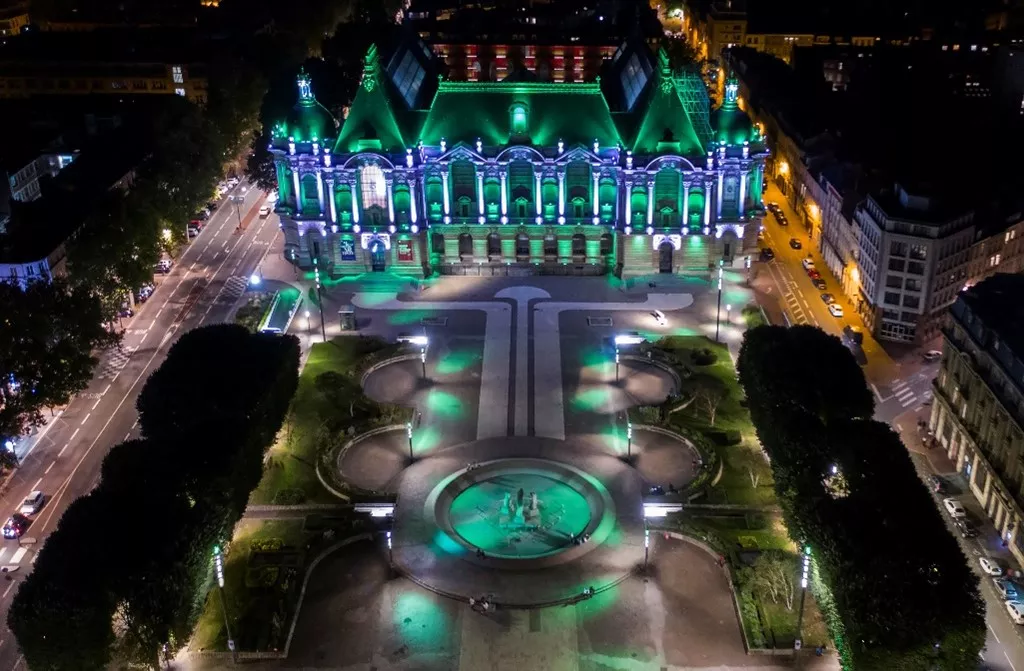
We offer various types of streetlights: functional ones for roadways, decorative ones to highlight historic sites, or solar-powered ones for areas not connected to the grid. Our teams support you from the initial audit through to commissioning, including equipment selection and full installation. Every LED streetlight project is tailored to your budget constraints and the specific characteristics of your area.
Remote Management and Connected Street Lighting
Remote management allows you to control your entire lighting infrastructure remotely via a connected IoT platform. LoRa, 4G, or 5G networks transmit data in real time from each light fixture or streetlight control cabinet. You can schedule on/off times, adjust brightness as needed, and receive instant alerts in the event of a failure.
This centralized monitoring reduces maintenance costs. Your teams respond on demand rather than conducting routine rounds. Energy consumption data is automatically reported, making it easier to track energy savings. Streetlight control cabinets play a key role in this control chain by serving as the link between the management platform and the streetlights in the field. These connected lighting systems give you total control and optimal responsiveness.
Smart Lighting: Adjusting the light to exactly what’s needed
Smart lighting automatically adjusts brightness based on occupancy, schedules, and weather conditions. Motion sensors activate full brightness when a pedestrian or vehicle passes by, then dim the lights when no movement is detected. You can also program the lights to dim during off-peak hours. Reducing brightness or turning off all or part of the lighting at night is an increasingly common option for reducing energy consumption.
These dimming mechanisms can reduce energy consumption by up to 80%. Turning off nighttime lighting or reducing lighting levels at night provides a concrete solution to the challenge of limiting light pollution. You help preserve biodiversity while maintaining an appropriate level of safety in your streets and public spaces.
Sustainable Lighting and Energy Performance Contracts (EPCs)
An Energy Performance Contract (EPC) commits the service provider to a measurable reduction in energy consumption. It covers financing, installation, maintenance, and performance monitoring over a period of 8 to 12 years. The savings achieved partially finance the initial investment, making the project accessible even with tight budgets.
For you, this means predictable costs, guaranteed performance, and long-term support. The EPC is fully aligned with your municipality’s sustainable development and energy transition goals. You improve the quality of your street lighting with high-performance lighting systems, while reducing your carbon footprint and your electricity bill.
Smart street furniture and lighting fixtures (streetlights, solar streetlights)
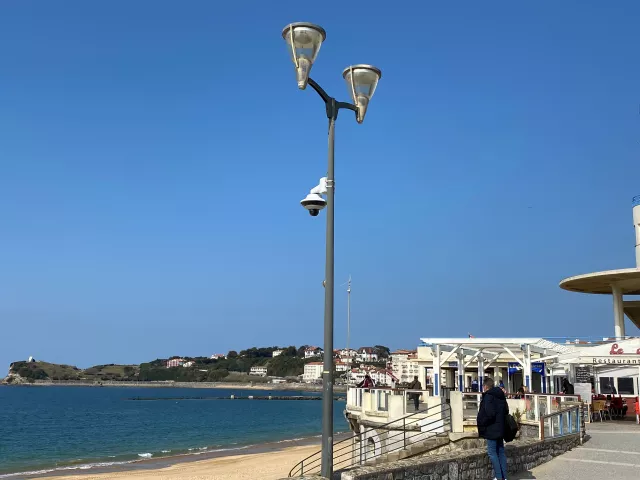
Multiservice streetlights incorporate charging stations for electric vehicles, Wi-Fi hotspots, video surveillance cameras, and environmental sensors. This connected street furniture optimizes public space by consolidating multiple services onto a single pole. It addresses the challenges of modern, connected, and sustainable roads.
Solar-powered street lighting is particularly well-suited for rural areas or those not connected to the power grid. These solar streetlights reduce connection costs and can be installed quickly without civil engineering work. An LED streetlight consumes an average of 30 to 60 W, compared to 100 to 250 W for conventional lighting. Lighting street furniture blends seamlessly into your urban planning projects and helps showcase your architectural heritage.
Renovation, remote management, maintenance: Let’s work together to develop your community’s lighting plan
“ One of the challenges of smart cities is to create an urban lighting infrastructure that fosters synergy between street lighting and street furniture. ”
A Video on Energy-Efficient and Smart Street Lighting
Street Lighting: Innovation in Energy Consumption and Usage
Ask!ip—is there such a thing as simple, smart lighting?
Entrust your streetlight system to a specialist in LED retrofits and remote management



Frequently Asked Questions About Street Lighting
How much does it cost to retrofit street lighting to LED?
The cost of the retrofit varies depending on the size of the lighting system, the condition of the fixtures, the products and equipment selected, and the type of contract chosen. On average, expect to spend between €500 and €1,000 per light fixture for a complete lighting retrofit. An LED fixture consumes an average of 30 to 60 W, compared to 100 to 250 W for conventional lighting. A Global Performance Contract (GPC) or an Energy Performance Contract (EPC) allows the investment to be recouped through energy savings. Local governments can benefit from energy savings certificates (CEE) to reduce the initial cost.
What is a smart, connected streetlight?
A smart streetlight is an LED streetlight equipped with sensors and connected to a remote management platform. It automatically adjusts its light output based on the presence of pedestrians or vehicles and the time of day. Thanks to this connectivity, it provides lighting tailored to specific needs while allowing for real-time monitoring of its operation and energy consumption.
How does smart lighting help reduce a municipality's energy bill?
Smart lighting combines LEDs and remote management to optimize energy consumption. Motion sensors turn on or brighten the lights only when necessary. A schedule allows for reduced power during off-peak hours and partial shutdown at night. The entire system is controlled from a centralized platform that adjusts lighting cycles based on actual needs, thereby reducing energy bills by up to 80%.
What is remote management of street lighting?
Remote management refers to the remote control of each light fixture via 4G, 5G, or LoRa networks. It enables real-time fault detection, monitoring of each streetlight’s energy consumption, and scheduling of on and off times. This centralized monitoring improves maintenance responsiveness and ensures reliable, energy-efficient street lighting.
Turning Off Streetlights at Night: Should We Turn Them Off?
Nighttime lighting is a key issue for local governments: total or partial shutdown represents a balance between energy savings, safety, and respect for biodiversity. Since 2022, 30% of French municipalities have been turning off their lights during the middle of the night. Dimming—that is, reducing brightness rather than turning lights off completely—is often preferred to maintain a sense of safety. It reduces light pollution and complies with the Luciole standard by minimizing disruption to nocturnal wildlife.
What energy savings can be achieved with LED street lighting?
Switching to LED lighting reduces energy consumption by a factor of three or four compared to conventional lighting. Thanks to its long lifespan of approximately 30,000 hours—compared to 1,000 hours for a traditional light fixture—LED lighting also reduces maintenance costs. When combined with remote management and dimming, energy savings can reach up to 80%. These savings result in a significant reduction in energy costs and an extended lifespan for the lighting system.
Who should a municipality contact regarding public lighting?
The mayor is responsible for municipal street lighting, which falls under his or her jurisdiction regarding public safety on public roads. Equans supports municipalities of all sizes—from small rural towns to major metropolitan areas—in the renovation, remote management, and maintenance of their lighting infrastructure. Contact our street lighting specialists for a personalized assessment and a quote tailored to your area.
What is an Energy Performance Contract (EPC)?
An EPC is a contract that commits the service provider to measurable results in reducing energy consumption. It sets specific, guaranteed, and verified targets, generally over a period of 8 to 12 years. The CPE covers financing, construction work, maintenance, and performance monitoring. It allows local governments to control their spending while ensuring the promised energy savings.
What are the standards and requirements for street lighting in municipalities?
The main standards are NF EN 13201, which defines photometric performance requirements and lighting classes, and decree of December 27, 2018 on the prevention of light pollution. The mayor is required to ensure the safety of pedestrians on public roads, road shoulders, and traffic lanes. These standards govern illuminance levels, uniformity, glare control, and the limitation of light pollution.
Streetlight schedules: What time do they turn off?
Schedules vary by municipality and depend on the control method: twilight sensor or astronomical clock. The current trend is to turn off the lights or reduce their brightness between 11 p.m. and 5 a.m. Each decision is made by the city council based on local considerations regarding safety, energy conservation, and respect for nocturnal biodiversity.
What is street lighting called?
Street lighting also refers to street lamps. The support structure is called a lamppost, streetlight, or pole, depending on its shape and function. Different types of streetlights serve various purposes in cities: functional models illuminate traffic lanes, decorative versions highlight historic landmarks, and solar lighting systems are used in areas not connected to the power grid.
What are the components and light bulbs used in street lighting?
The essential components of an installation include the mast or pole, the bracket, the luminaire with its LED bulb, the control cabinet, and the wiring system. LED bulbs have replaced sodium and mercury vapor lamps to provide high-quality street lighting while reducing energy consumption. An LED light fixture consumes an average of 30 to 60 W, compared to 100 to 250 W for traditional lighting.
What is the purpose of a streetlight control cabinet?
The control cabinet centralizes the control of multiple light fixtures and manages switching on, switching off, and dimming. It is connected to the remote management platform and enables energy consumption monitoring as well as fault detection. In the field of street lighting, the cabinet serves as the heart of the smart management system and ensures the reliability of the network.

Let our experts handle your street lighting
Are you looking to modernize your lighting system? Our lighting specialists will guide you every step of the way: assessing your existing systems, conducting an energy audit, designing your lighting plan, installing LED streetlights, and providing remote management and maintenance. With Equans, enjoy lighting tailored to your needs, measurable energy savings, and a customized energy performance contract. Request your personalized quote.Let our experts handle your street lighting
Are you looking to modernize your lighting system? Our lighting specialists will guide you every step of the way: assessing your existing systems, conducting an energy audit, designing your lighting plan, installing LED streetlights, and providing remote management and maintenance. With Equans, enjoy lighting tailored to your needs, measurable energy savings, and a customized energy performance contract. Request your personalized quote.