

High-Voltage A and Low-Voltage Networks: Electricity Distribution Across Regions
High-voltage and low-voltage lines, high-voltage/low-voltage substations, underground cabling, and maintenance: Equans builds and maintains electrical distribution networks for local governments and energy cooperatives.High-Voltage A and Low-Voltage Networks: Electricity Distribution Across Regions
High-voltage and low-voltage lines, high-voltage/low-voltage substations, underground cabling, and maintenance: Equans builds and maintains electrical distribution networks for local governments and energy cooperatives.
The HV (high-voltage A, also known as medium-voltage) grid transmits electricity throughout the region. The LV (low-voltage) grid distributes it to end users. Together, they make up the region’s electricity distribution grid.
Equans designs, builds, buries, and maintains these grids for local governments, energy cooperatives, and developers. Our teams work on power lines, HV/LV substations, and service connections. Extra-high-voltage (EHV) transmission falls under our energy infrastructure. Connecting a residence to the grid is the responsibility of Enedis. With our network solutions, we build high-performance and resilient infrastructure.
Is your region planning to expand, upgrade, or bury its power grid?
What is a high-voltage/low-voltage (HV/LV) electrical distribution network?
The electrical distribution network connects the transmission network to consumers. It encompasses several voltage levels.
Voltage levels: high-voltage (HTA) grid, extra-high-voltage (HTB) grid, and low-voltage (BT) grid
The electric grid is organized into three voltage levels. The HVB (high-voltage B) grid transmits electricity over long distances to source substations. This portion of the grid is part of our energy infrastructure.
The medium-voltage (MV) grid then distributes electricity throughout a region via overhead or underground power lines and MV/LV substations. Enedis, the public distribution system operator, operates a large portion of these facilities. The low-voltage (LV) grid directly supplies buildings, businesses, and street lighting at 230 or 400 volts.
Medium voltage in the HV network: 1 kV to 50 kV
The HV network operates at medium voltage, ranging from 1 kV to 50 kV, most commonly at 20 kV. It is a three-phase grid that supplies neighborhoods, business districts, and public facilities.
Between the high-voltage (HTA) and low-voltage (BT) systems, the HTA/BT substation steps down the voltage. It contains an HTA/BT transformer, HTA switchgear, and protective devices. Without it, the energy from the HTA grid remains unusable by consumers.
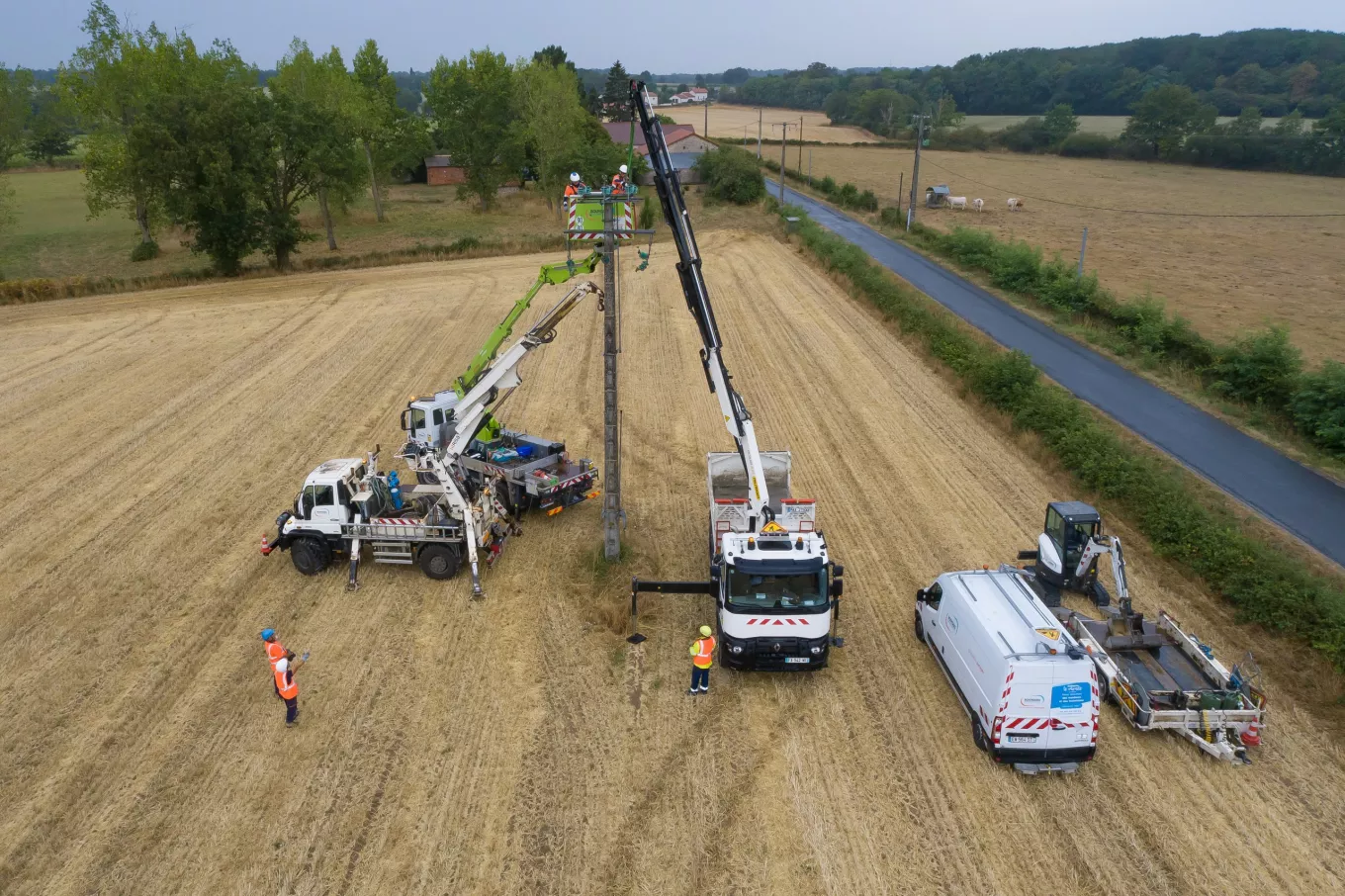
Design and build your high-voltage and low-voltage networks
Equans supports local governments, energy consortia, developers, and industrial companies in building their distribution networks. Our teams handle everything from feasibility studies to commissioning. They manage the road and utility infrastructure work required for these projects.
Overhead and Underground High-Voltage Networks
The networks combine overhead and underground infrastructure, depending on the constraints of each area. Equans builds, extends, renovates, and maintains overhead high-voltage lines in urban, rural, and suburban areas. We also construct underground high-voltage networks, including trenches and connections.
Local Low-Voltage Networks
The low-voltage network is the final link in the electricity distribution chain. It supplies power to residential neighborhoods, public facilities, and business districts. Equans is responsible for its construction, expansion, and modernization.
Utility and Roadwork and Public Space Development
A high-voltage/low-voltage power grid is part of a comprehensive development project. Thanks to its expertise in road and utility infrastructure, Equans manages the associated earthworks, trenching, and civil engineering.
Prior to construction, regulations require the DT-DICT notifications: a project notification and a notification of intent to begin work, for any construction site near existing utility networks. Our teams incorporate these into the preparation for each project. We also handle road repairs and the coordination of utility networks.
High-voltage and low-voltage lines, high-voltage/low-voltage substations, connections, road and utility infrastructure: let’s work together to build your region’s distribution network
High-Voltage/Low-Voltage Substations: Installation and Connection
The HV/LV substation, also known as a distribution substation, serves as the interface between the medium-voltage grid and the low-voltage grid. It supplies power to consumers.
Equans designs, builds, and maintains these facilities on behalf of local governments, without acting as their operator: this responsibility falls to the public distribution network operator, Enedis, in most municipalities. Our teams work on HV switchgear, HV/LV transformers, transformer rooms, and protection systems.
Extra-high-voltage (EHV) transmission and source substations are managed by other entities within the Equans Group: discover our offerings in energy infrastructure and power grids.
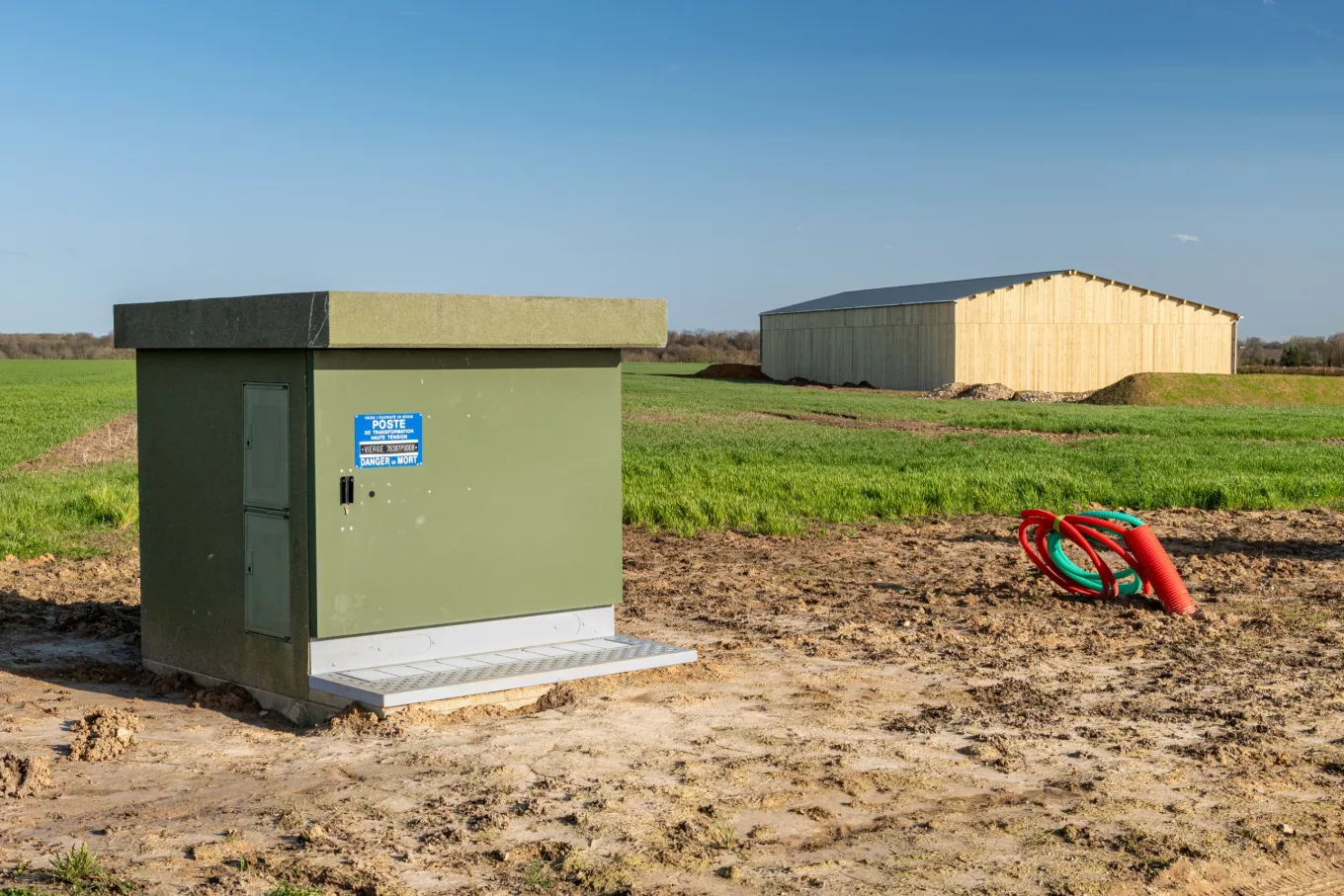
Are you planning a project to bury or reinforce your high-voltage and low-voltage power lines?

Burying Electrical Lines: Resilience and Quality of Life
Burying power lines, also known as undergrounding, modernizes the electrical distribution system. By removing the most exposed overhead lines, you strengthen your grid’s resilience and enhance the beauty of your landscape.
Burying HV and LV Power Lines for Municipalities
Equans supports municipalities and energy cooperatives in their programs to bury HV and LV power lines.
Our services include:
- Project studies and sizing.
- Road and utility infrastructure work, earthwork, and civil engineering.
- Installation of utility networks, high-voltage/low-voltage substations, and connections.
- Restoration of public spaces.
Dry networks: electricity, telecommunications, and street lighting in a shared trench
These projects often modernize all of the dry networks in a given area: electricity, telecommunications and street lighting. Our teams coordinate these networks to consolidate construction work, minimize disruption, and optimize local governments’ investments. Dry utility networks do not carry water, unlike wet utility networks: discover our offerings for wet utility networks and gas.
Greater resilience to weather events
Burying power lines reduces the vulnerability of the grid to high winds, heavy snowfall, storms, and falling trees. An underground power grid ensures better service continuity for your community.
Electric Power Grids and Street Lighting: Complementary Expertise
Electric power grids and street lighting are closely linked in local government development projects. Thanks to its dual expertise, Equans deploys and modernizes your high-voltage (HV) and low-voltage (LV) networks. At the same time, we handle the installation, renovation, and connection of your street lighting. You have a single point of contact for all overhead power lines in the area.
Strengthening and Securing Networks Against Climate-Related Risks
Climate change is increasing the frequency and intensity of extreme weather events. Storms, snow, high winds, and heat waves are putting pressure on distribution networks. Service continuity is becoming a major challenge for local communities.
Supporting Network Operators and Energy Consortia
Equans works alongside network operators, energy consortia, and local governments to reinforce existing infrastructure. These projects include replacing equipment, reinforcing power lines, modernizing high-voltage and low-voltage substations, and selectively burying the most exposed power lines.
Rapid response following a weather event
Equans relies on its nationwide network and local teams. We assist operators in restoring networks following a major event. Our teams secure the affected areas, replace damaged equipment, and restore power as quickly as possible.
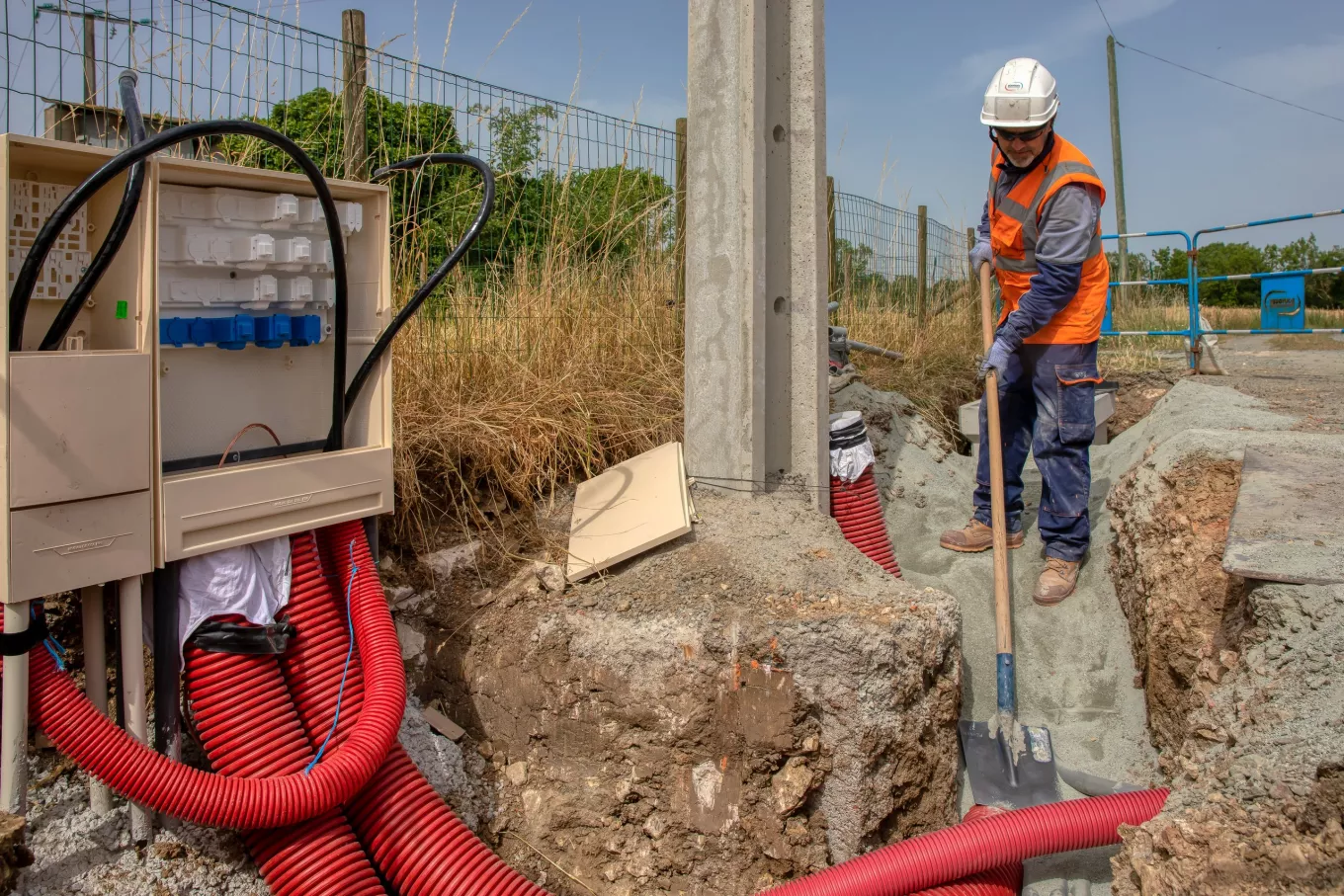
Customized solutions for complex projects
Every region has its own geographic, environmental, and technical constraints. Mountainous areas, remote regions, dense urban centers, or sensitive natural areas require tailored approaches.
Depending on the project, our teams deploy specific resources: helicopter transport of electrical equipment, specialized handling equipment, or construction methods adapted to complex environments. This capability relies on the coordination of a wide range of expertise: high-voltage and low-voltage networks, road and utility infrastructure, civil engineering, street lighting, utility connections, and construction site safety.
Operation and Maintenance of Distribution Networks
Equans offers local governments and energy cooperatives electrical maintenance services for their high-voltage (HV) and low-voltage (LV) networks. Our services cover both preventive and corrective maintenance.
Our teams also work on high-voltage (HV)/low-voltage (LV) substations and overhead lines. They anticipate failures to extend the service life of your facilities and ensure uninterrupted service.
Construction, burial, reinforcement, maintenance: a single point of contact for your region’s electrical networks
We support local governments and energy cooperatives in the construction, underground installation, and maintenance of their electrical grids. Check out our latest news and projects related to distribution networks.



Frequently Asked Questions About HV/LV Networks
What is an HTA network, and what does this acronym stand for?
HTA stands for high voltage A, also known as medium voltage. This is the grid that distributes electricity across a region, generally at 20 kV. It connects the source substations to the HV/LV substations serving neighborhoods, business districts, and public facilities. This grid can be overhead or underground, depending on local conditions.
What is the difference between HTA and HTB?
These are two distinct voltage levels. The HVB (high-voltage B) grid transports electricity over long distances: this is the scope of our energy infrastructure. The HV network then distributes electricity throughout the region to the HV/LV substations. Finally, the LV (low-voltage) network supplies electricity to end users.
What is the value of medium-voltage (MV)?
Medium voltage, or HV, ranges from 1 kV to 50 kV. In France, the medium-voltage grid most often operates at 20 kV. It is a three-phase grid, transmitted via overhead lines or underground cables depending on the region.
What is the purpose of a high-voltage/low-voltage substation?
A high-voltage/low-voltage substation steps down high voltage to low voltage. It supplies power to a neighborhood, a business district, or public facilities. It consists of a high-voltage/low-voltage transformer, high-voltage switchgear, and protective devices, housed in a transformer room or a prefabricated substation.
Why bury a power line?
Burying power lines protects the grid from inclement weather, falling trees, and storms. It improves service reliability and reduces outages. It also enhances the landscape and frees up public space for other uses. There is no general requirement for underground installation: it applies to new lines in certain protected areas, such as designated historic sites, and may be mandated locally by the local urban planning ordinance.
What are dry networks?
Dry utility lines carry energy or data without water: electricity, street lighting, telecommunications, and, most commonly, natural gas. They are installed in a common trench during underground installation work. Wet utility lines carry water: drinking water, stormwater, wastewater, and district heating systems.

Talk to our power grid experts
Are you planning a utility undergrounding project, the expansion of a high-voltage network, or the modernization of your high- and low-voltage substations? Our experts will analyze the constraints in your area and provide you with a solution covering everything from design to maintenance. Let’s discuss your project.Talk to our power grid experts
Are you planning a utility undergrounding project, the expansion of a high-voltage network, or the modernization of your high- and low-voltage substations? Our experts will analyze the constraints in your area and provide you with a solution covering everything from design to maintenance. Let’s discuss your project.