

Water and Gas Networks: Building and Upgrading Local Drinking Water, Heating, and Gas Networks
Drinking water, heating, and gas networks: Equans builds, renovates, and georeferences the underground networks of local governments and associations.Water and Gas Networks: Building and Upgrading Local Drinking Water, Heating, and Gas Networks
Drinking water, heating, and gas networks: Equans builds, renovates, and georeferences the underground networks of local governments and associations.
Drinking water, heating, and gas networks are essential services for residents. Behind each of these lies an infrastructure of underground pipes that must be built, maintained, and replaced.
Equans supports local governments, associations, and network operators. We build new networks and renovate existing infrastructure. We replace pipelines used for drinking water and gas supply.
We work on public utility networks, never on individual residential properties. This expertise in water and gas networks complements our work on electric networks and all of our network solutions.
Does your municipality need to replace its drinking water or gas pipes?
Drinking Water and Gas Networks: A Strategic Asset in Need of Renewal
Underground utility networks are one of the most important parts of a community’s technical infrastructure. A large portion of the drinking water and gas pipelines was installed several decades ago. Today, they need to be renovated or replaced.
Aging infrastructure, leaks, safety, and performance: these issues shape the modernization programs undertaken by local governments.
What is a drinking water system? Definition and Architecture
A drinking water distribution system consists of the pipes, reservoirs, and pumping stations that manage the water supply. It transports water from the source—whether a groundwater aquifer or a watercourse—to the point of delivery.
There are two types of network architectures: the branched network, which radiates from a single point like a tree, and the meshed network, which has multiple connections. This meshed structure ensures a reliable water supply in the event of an incident.
This water management at the public network level ensures continuity of service for users.
What are the different water, heat, and gas networks?
There are generally three types of water networks: drinking water, wastewater (sewerage), and stormwater. Localities also rely on underground heating and gas networks. Each serves specific purposes and is subject to its own regulations.
All face the same challenges related to construction, renewal, and safety. Equans works on drinking water, heating, and gas networks, which are detailed in the following sections.
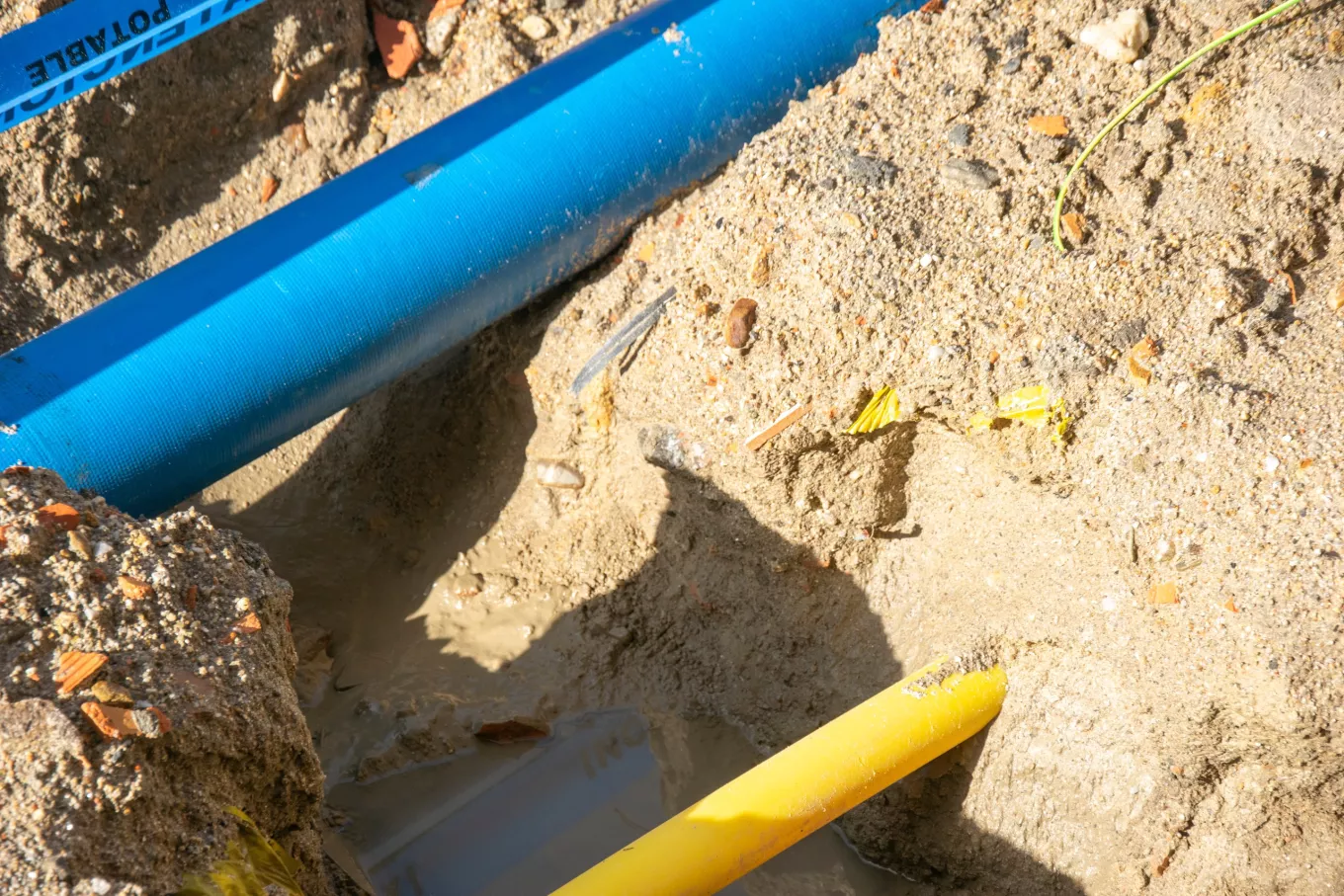
Our offerings for drinking water systems
Construction and Replacement of Drinking Water Pipelines
Equans carries out construction, expansion, and renovation work on drinking water networks for local governments and utility operators. Our teams handle everything from design to commissioning.
We install new pipes, replace aging pipelines, and ensure the safety of infrastructure. Some of the existing infrastructure, which is sometimes made of asbestos-cement, requires special monitoring.
In our drinking water projects, we select materials based on their intended use to improve efficiency and minimize water loss.
AEP: definition, supply, distribution, and connections
Drinking water supply (AEP) refers to the infrastructure that transports water from its sources to users. Equans works on water supply, transmission, and distribution networks, as well as on the associated water supply connections and hookups.
Our solutions ensure service continuity and quality, which are essential to regional development.
Drinking Water Connections and Master Plan
Beyond the pipelines, we install drinking water connections in new neighborhoods.
Our work brings your community’s drinking water master plan to life. This document prioritizes investments over several years, based on the condition of existing infrastructure and local priorities.
Here is an overview of our services and their benefits for your community:
- Construction of new networks: serves new neighborhoods and ensures a reliable water supply.
- Pipe replacement: reduces water loss and extends the network’s lifespan.
- Drinking water connections: ensures uninterrupted service for users.
- Work on the drinking water master plan: implements long-term investment priorities.
Construction, renewal, and connection: Let’s work together to modernize your region’s drinking water system.
District Heating Networks: Infrastructure for a Sustainable Region
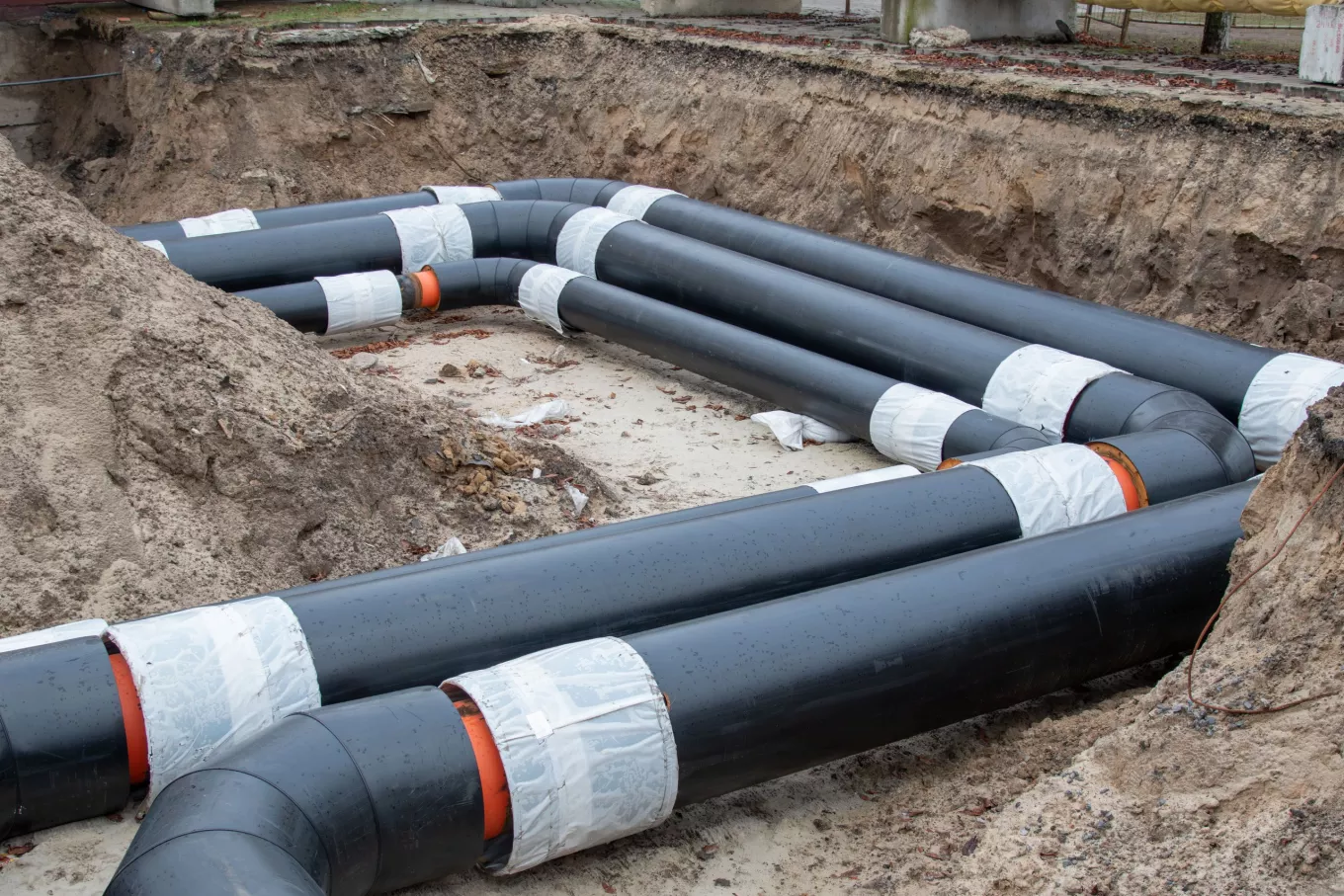
A district heating network, also known as urban heating, enables a community to produce, distribute, and utilize local, low-carbon energy. It supplies heat to homes, public buildings, sports facilities, and healthcare facilities in both urban and rural areas.
The heat comes from renewable and recovered energy sources: biomass, geothermal energy, industrial waste heat, and waste-to-energy. By pooling the needs of a neighborhood, a heating and cooling network reduces greenhouse gas emissions and strengthens the region’s energy independence.
Building and Modernizing Heating and Cooling Networks
Equans supports local governments, developers, and operators in the creation, expansion, and renovation of their heating networks. Our teams install pre-insulated pipes, connect them to buildings, and expand and modernize existing infrastructure.
A Partner for Decarbonizing Communities
Our approach integrates environmental considerations at every stage: route optimization, minimizing the impact of construction sites, utilizing local resources, and ensuring the longevity of infrastructure.
Building a district heating network means investing in sustainable infrastructure. It contributes to residents’ quality of life and to the decarbonization of the region.
Are you planning a district heating project or looking to replace your gas lines?
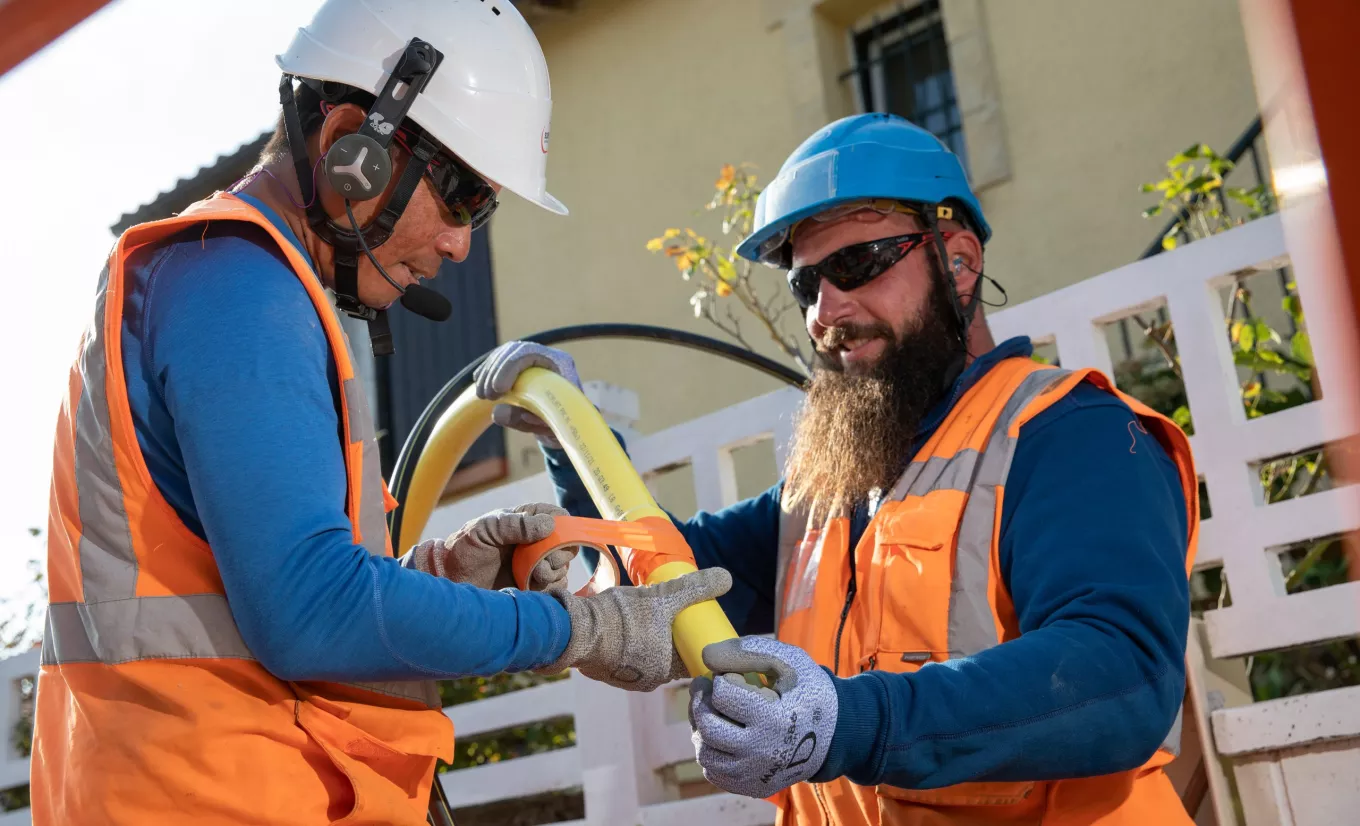
Our Gas Network Offerings
A natural gas network is a strategic energy infrastructure for your region. Its design, expansion, and modernization require specialized expertise and a thorough understanding of safety issues.
Construction, Renovation, and Expansion of Gas Pipelines
We support utility operators and local governments in building new networks, expanding existing infrastructure, and replacing aging pipelines. Our teams are experts in all aspects of underground gas pipeline work, in compliance with safety standards and applicable regulations.
Example in the field of biomethane: a rebours station is a compression station that makes the network bidirectional. It compresses surplus biomethane from the distribution network to inject it into high-pressure pipelines.
For this type of project, we install cathodic protection for the pipelines, which stops or significantly slows electrochemical corrosion.
Ensuring the Safety and Sustainability of Gas Infrastructure
Modernizing networks enhances the reliability of infrastructure and ensures the safety of people and property. We apply our expertise to projects involving the renewal and adaptation of gas networks, to create safer and more sustainable communities. Our teams also carry out emergency repairs to fix leaks.
As-built Survey and Georeferencing of Underground Utility Networks
The as-built plan accurately depicts the location and characteristics of the structures completed at the end of a construction project. It serves as the network’s “identity card.”
It is part of the regulations for the protection of utility networks, known as DT-DICT (declaration of proposed work and declaration of intent to begin work): new underground utility networks must be mapped to accuracy class A, meaning an uncertainty of no more than 40 cm for a rigid structure and 50 cm for a flexible structure. This level of accuracy reduces the risk of damage to existing utility networks during future construction projects.
Georeferencing and Knowledge of Buried Infrastructure
Equans georeferences the structures it installs, regardless of the natural environment they pass through, and provides local authorities and operators with compliant as-built drawings.
Thanks to our technical resources, you have a precise understanding of your underground infrastructure. This data helps you plan for renewal and ensure the safety of your future projects.
Our Services, from Design to Final Inspection
Our expertise in road and utility infrastructure projects (VRD) allows us to provide services throughout the entire lifecycle of these structures:
- Design and site preparation.
- Georeferencing of structures.
- Installation of drinking water, heating, and gas pipelines.
- Replacement of existing pipes.
- Connections and commissioning.
- Verification procedures.
- Restoration of roads and infrastructure.
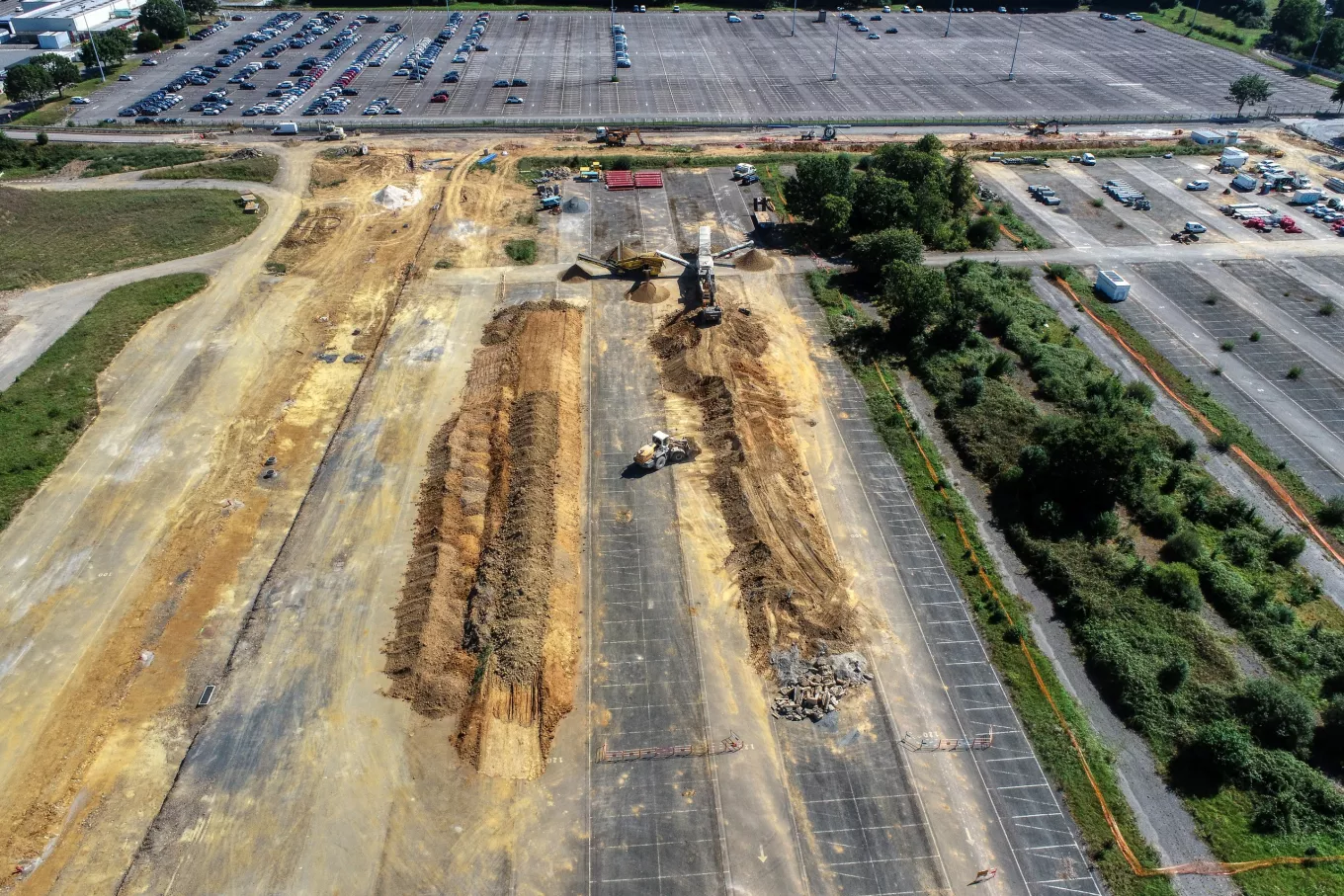
IoT Solutions: Managing and Optimizing Water and Gas Networks
The digitization of drinking water and gas networks improves their performance, safety, and operations. Thanks to IoT (Internet of Things) technologies, local governments and operators have a real-time view of their infrastructure.
Connected sensors continuously collect data on flow rates, pressure, water consumption, and equipment status. This monitoring facilitates the early detection of leaks and anomalies in the networks and reduces resource losses.
Connected to a hypervision platform, this data helps managers plan maintenance in advance and optimize their interventions. These solutions complement the smart grids deployed in electrical infrastructure and are part of our approach to smart city and smart regions.
Surveys, construction, georeferencing, and as-built documentation: a single point of contact for your underground utility networks.


Frequently Asked Questions About Drinking Water, Heating, and Gas Networks
What is a drinking water supply system (AEP)?
The drinking water supply system (AEP) encompasses the infrastructure that transports water intended for human consumption from water sources or storage facilities to distribution networks. It includes pipes, equipment, and transport facilities used before the water is distributed to users in the area.
What is the difference between drinking water supply and distribution?
The water supply system transports water from the intake, treatment, or storage facility to local networks. Distribution then takes over, delivering drinking water to customers, public facilities, and businesses. These two stages are complementary and essential to the public water service.
Why replace drinking water pipes?
Pipes deteriorate over time due to ground movement and changing usage patterns. Replacing them reduces water loss, improves service quality, and enhances infrastructure safety. It also conserves water resources and adapts the network to your region’s future needs.
What is a as-built plan, and why is it required?
The as-built plan accurately depicts the location and characteristics of the structures completed at the end of a construction project. It serves as the network’s “identity card”: it facilitates the management of underground infrastructure and ensures the safety of future work. It complies with regulations designed to prevent damage to utility networks (DT-DICT), which require new underground utility networks to be mapped to precision class A in order to reduce the risk of damage during future construction projects.
What is a district heating system?
A district heating network distributes heat generated centrally to multiple buildings via insulated, underground pipes. This heat often comes from renewable or recovered energy sources: biomass, geothermal energy, and industrial waste heat. A district cooling network operates on the same principle, but for air conditioning.
How does a drinking water system work?
Water is collected at the source and then transported via a pipeline to a storage reservoir. The distribution network then delivers it to consumers. The performance of this system depends on the design, the materials, the installation of the pipes, and accurate as-built documentation of the structures.
What is the water pressure in the drinking water system?
The pressure in a drinking water system depends on the elevation of the reservoirs and the topography. Water typically flows through the system by gravity. At users’ meters, the pressure is generally between 2 and 4 bars. Boosters and pressure regulators adjust it depending on the area. Controlled pressure helps prevent leaks and pipe breaks.
What are the challenges involved in renovating gas networks?
The renovation of gas networks maintains a high level of safety and ensures the long-term viability of the infrastructure. It also keeps pace with changing patterns of use across the region. Replacing pipelines improves the reliability of the network and meets regulatory requirements related to the operation of gas facilities.

Talk to our experts in wet and gas networks
Are you looking to modernize a drinking water network, develop a district heating network, or make your gas pipelines safer? These underground networks are a strategic asset for your region, designed to remain operational for decades. Equans supports local governments, associations, and network operators at every stage: studies, construction, renewal, georeferencing, and continuous improvement. Let’s discuss your project.Talk to our experts in wet and gas networks
Are you looking to modernize a drinking water network, develop a district heating network, or make your gas pipelines safer? These underground networks are a strategic asset for your region, designed to remain operational for decades. Equans supports local governments, associations, and network operators at every stage: studies, construction, renewal, georeferencing, and continuous improvement. Let’s discuss your project.