

Fiber Optics for Businesses and Regions
Design, deployment, connection, maintenance: Equans builds and maintains fiber-optic networks for businesses, local governments, and telecommunications carriers.Fiber Optics for Businesses and Regions
Design, deployment, connection, maintenance: Equans builds and maintains fiber-optic networks for businesses, local governments, and telecommunications carriers.
Enterprise fiber optics is the gold standard for providing sustainable connectivity to businesses, local governments, and critical infrastructure, whether through dedicated fiber or a shared network. It carries ever-increasing volumes of data and supports organizations’ digital applications.
Equans designs, deploys, connects, and maintains fiber-optic infrastructure for businesses, local governments, and telecom operators. We are neither a telecom operator nor a hardware supplier: we do not sell subscriptions, modems, or cable by the meter. We build and maintain, end-to-end, the physical infrastructure that carries your communications and data. This offering is part of our telecommunications infrastructure.
From serving publicly funded networks to providing dedicated fiber connections for strategic sites, our teams support multi-site businesses, local governments, operators, and infrastructure managers throughout the entire lifecycle of their projects.
Do you need to connect your sites or deploy fiber-optic infrastructure in your area?
Why Fiber Optics Have Become Indispensable
For businesses, industrial sites, and critical infrastructure operators, fiber optics ensure business continuity. It also supports the digital transformation of their organizations.
Cloud-based business applications, cybersecurity, remote monitoring, and connected devices: these uses are on the rise. They require high bandwidth, enhanced security, and reliable infrastructure. Multi-site businesses, in particular, need high-performance, scalable networks.
These demanding business applications take several forms:
- Hosting and synchronization of business applications in the cloud.
- Remote monitoring of industrial or technical sites.
- Deployment of connected devices and sensors.
- Transfer of large files between multiple sites.
- HD videoconferencing and Voice over IP between your employees and your sites.
For local governments, fiber optics is a key driver of digital development, economic attractiveness, and the quality of public services. It ensures high-performance internet access for residents, businesses, and public facilities.
It also connects the region’s transportation infrastructure and digital services. This network underpins citizens’ daily lives and the operation of public services.
Fiber optics thus form the foundation of regional competitiveness. They also support the modernization of public and private infrastructure.
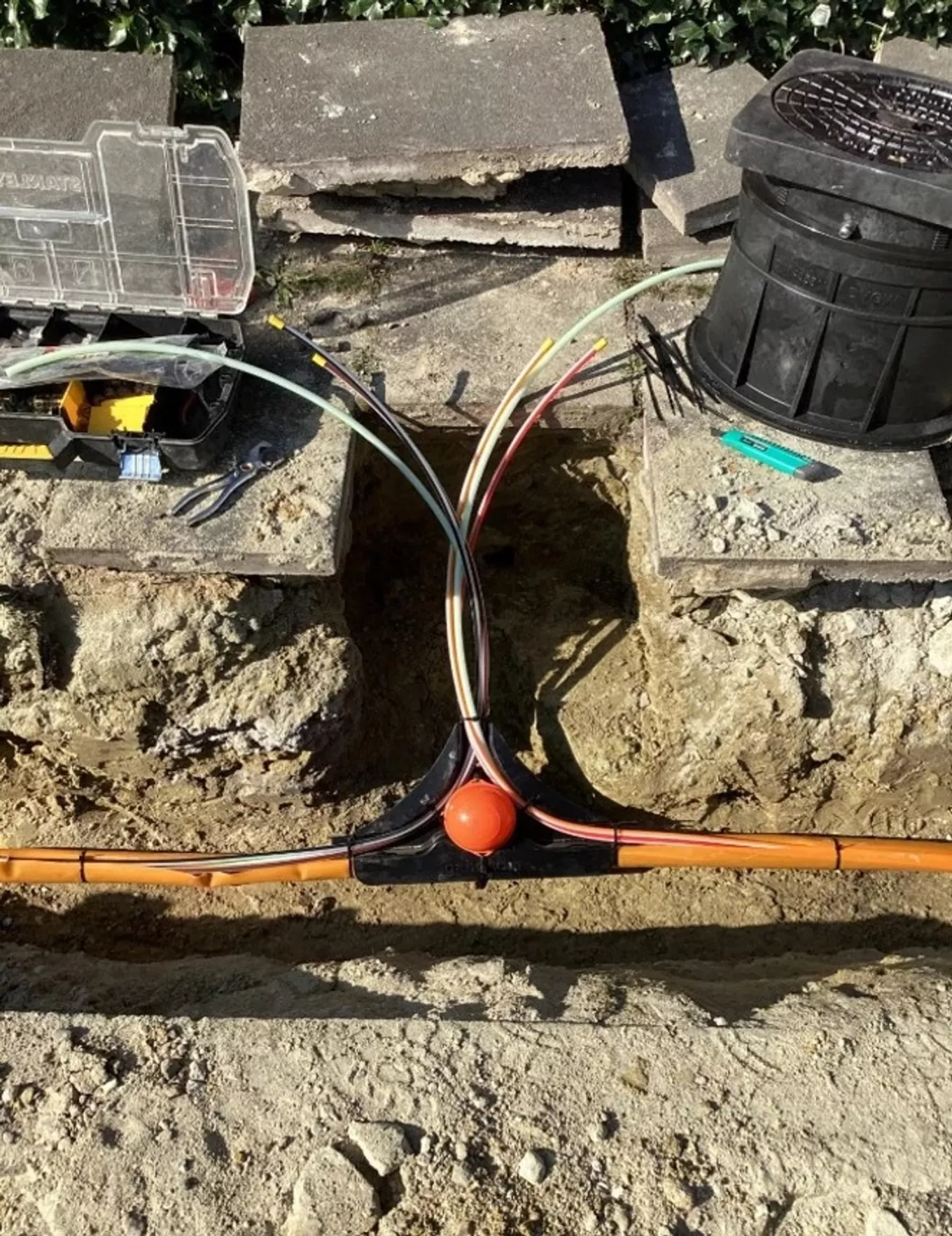
Professional Fiber Optics: Our Offerings for Businesses and Local Governments
Equans operates across the entire value chain of enterprise fiber-optic infrastructure. From preliminary studies to network deployment, site connections, and maintenance—we cover every step.
Our projects are supported by our engineering offices specializing in telecom infrastructure. They conduct feasibility studies and define fiber-optic routes. They also analyze technical and regulatory constraints, then design the infrastructure required to support future uses. This expertise allows us to anticipate your business fiber needs and safeguard your investments.
Dedicated Fiber: A Secure, Customized Connection for Your Strategic Sites
Certain infrastructures require a high level of availability and performance. A dedicated fiber connection is reserved for a single site or organization, unlike a shared fiber connection, which is shared among multiple users.
It is suitable for monitoring centers, strategic public buildings, and transportation infrastructure. It also meets the needs of industrial sites and multi-site businesses. Symmetrical bandwidth—the same upload and download speeds—availability, and guaranteed restoration time (GTR) are among the commitments associated with these connections.
Equans designs and builds the physical infrastructure for these business connections. The connectivity service, with its commitments regarding throughput and recovery time, is the responsibility of the carrier.
Dedicated Fiber vs. Shared Fiber: What’s the Difference?
A shared fiber connection divides its bandwidth among multiple users connected to the same point. During peak hours, usage spikes and performance may vary.
A dedicated fiber connection reserves all of its bandwidth for a single site or organization. It guarantees the availability of priority uses: monitoring, critical applications, or video surveillance streams.
- Users: a single site or a single organization for dedicated fiber; multiple users, with shared capacity, for shared fiber.
- Availability: high, with reserved capacity, for dedicated fiber; varies depending on network load for shared fiber.
- Typical uses: priority applications and critical data flows for dedicated fiber; general-purpose and office applications for shared fiber.
Equans designs and builds the physical infrastructure corresponding to these two approaches.
Connecting Buildings, Facilities, and Strategic Sites
Businesses, local governments, and infrastructure managers must connect a wide variety of sites. Headquarters, administrative buildings, campuses, industrial sites, schools, sports facilities, technical centers, or mobility infrastructure: every project has its own constraints.
Before each deployment, our engineering teams conduct on-site surveys and plan the fiber routes. They analyze existing infrastructure and identify the most appropriate connection solutions. This approach optimizes costs, reduces project timelines, and ensures the network’s future performance. Our teams then design and implement site interconnections to ensure service continuity and data flow.
We also support the implementation of closed user groups (CUGs): private fiber networks reserved for local governments, government agencies, public institutions, or infrastructure operators. These secure networks interconnect sites within the same organization or region. They ensure control over data exchanges and the performance of business applications, such as video surveillance or security at sensitive sites. They also enhance the resilience of communications.
FTTO and FTTH for Business: Enterprise Networks and Regional Coverage
FTTH (Fiber To The Home) directly connects end users via fiber optics. FTTO (Fiber To The Office) relies on infrastructure dedicated to business use. Performance, availability, and service continuity: these are what businesses, government agencies, and strategic sites are looking for.
A third architecture, FTTE (Fiber To The Enterprise), relies on the shared FTTH infrastructure. However, it offers a dedicated connection to the connected enterprise, with a performance level that falls between FTTH and FTTO. Operators’ so-called “FTTH pro” offerings are also based on this shared network.
These architectures form the foundation of ultra-high-speed broadband in local communities. Their deployment requires in-depth studies and detailed knowledge of the local terrain. It also requires rigorous coordination of the installation of each fiber-optic cable. Equans supports local governments, digital consortia, developers, operators, and infrastructure providers in the design, deployment, and maintenance of FTTH and FTTO networks.
A trusted partner for telecom operators
Telecom operators rely on ever-expanding fiber infrastructure. Deploying, expanding, and maintaining these networks requires technical expertise, a local presence, and in-depth knowledge of the regions.
Through our Ineo teams, Equans supports national telecom operators and alternative operators in the road, river, rail, and transportation sectors. Our services cover engineering, design, telecom civil engineering, connection, and maintenance of their fiber-optic infrastructure.
Dedicated fiber, FTTO, FTTH, site connectivity: Let’s work together to build the fiber infrastructure for your sites and your region
Engineering Firms at the Heart of Your Fiber Projects
The quality of a fiber-optic network is determined long before construction begins. It depends on the suitability of the chosen architecture and the ability to anticipate on-site constraints.
Equans’ engineering firms assist operators, local governments, digital consortia, TowerCos (companies that manage towers and elevated points), and infrastructure operators in preparing their projects. They conduct route studies, field surveys, network sizing, and analyses of existing infrastructure.
Every project begins with a detailed analysis of the geographic area in question: urban density, topography, industrial constraints, or proximity to critical infrastructure. This step determines the type of fiber and the architecture best suited to future uses, whether it involves a shared service or a dedicated connection. Our teams then prepare the technical deployment documents required to begin construction.
This upfront expertise allows us to anticipate constraints before they become costs. It safeguards your investments and reduces the risk of having to redo work during construction.
Our knowledge of urban, rural, and industrial environments, as well as critical infrastructure, ensures high-performance, scalable networks tailored to regional digital development. It also enables us to advise our clients on the best balance between performance, timelines, and budget, project after project.

Planning a fiber-optic deployment project? Our engineering firms will support you starting with the preliminary study
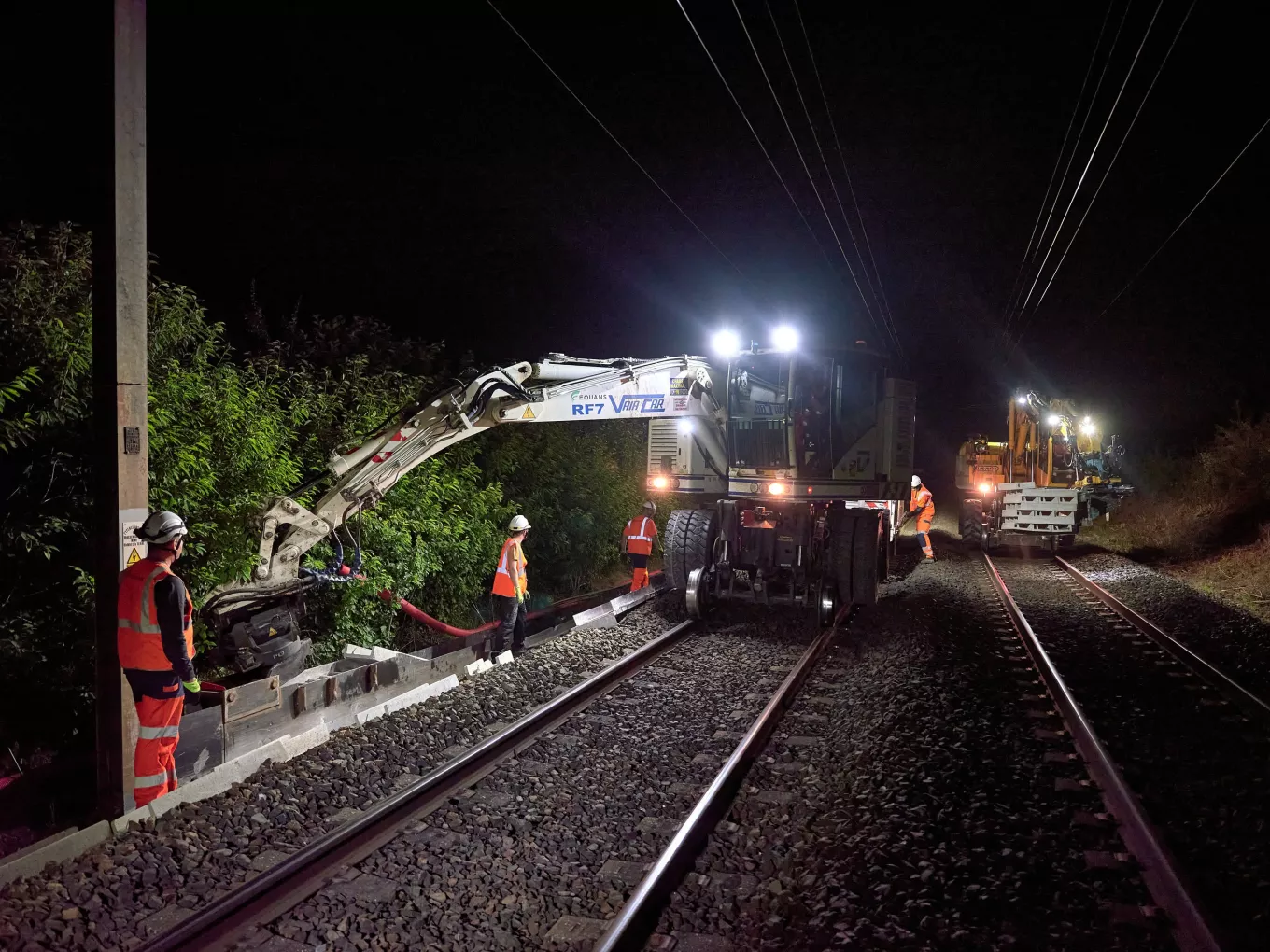
Fiber-Optic Installation Company: Construction and Deployment
The success of a fiber-optic deployment project depends on meticulous planning. Each step requires complementary skills.
Design, civil engineering, fiber-optic pulling, and splicing
Each project begins with design studies that define the network architecture and the most suitable routes. Our design offices develop the “digital routes” that will carry data for businesses, local governments, and public infrastructure.
A project manager then coordinates the work required to build the network.
The work includes the telecommunications civil engineering required to lay the cables. It also includes installing equipment, pulling the fiber-optic cable, and splicing the fibers.
A professional deployment generally takes place in six stages:
- Architectural and route planning.
- Civil engineering and cable installation.
- Optical fiber pulling and splicing.
- Connecting equipment and sites.
- Network commissioning.
- Preventive and corrective maintenance.
Connection, Commissioning, and Maintenance
Once the infrastructure is installed, connection procedures link the equipment to network users. Our teams handle the commissioning of the infrastructure and provide ongoing support for its operation.
Contractual bandwidth commitments and service level agreements (SLAs) are part of the service provided by the operator. They pertain to connectivity, not the physical infrastructure we build.
Preventive and corrective maintenance ensures network availability. It also supports technological upgrades.
Fiber Optics and Publicly Led Networks (RIP)
A public initiative network (RIP) is a telecommunications infrastructure deployed at the initiative of a local government. This solution is implemented in areas where no private operator plans to invest on its own.
Its goal: to ensure equitable access to ultra-high-speed broadband for residents, businesses, and public services. Without this type of initiative, certain regions would remain permanently cut off from the fiber-optic connections necessary for their development.
As a key player in regional digital development, Equans supports local governments and digital consortia at every stage of these projects. We are involved in the design, deployment, expansion, and maintenance of publicly-led networks.
Are you leading a publicly-led network (RIP) project? Our teams help you make informed technical decisions, starting with the initial feasibility studies. We then remain by your side to help evolve the infrastructure as your region’s needs change.
These networks play an essential role in regional economic development, attractiveness, and cohesion. They serve residents, businesses, and public services with the same commitment to reliability. For a local government, this is also a concrete way to fulfill its responsibility to citizens: investing in sustainable infrastructure designed to support digital uses for decades to come.
Our Clients: Key Players in Regional Digital Infrastructure Development
Equans supports a wide range of organizations in the design and maintenance of their fiber-optic infrastructure:
- Multi-site companies, whose operations depend on critical data flows and high-quality service between their locations.
- Local governments and digital consortia.
- Publicly-run network operators and closed user groups.
- National telecom operators and alternative operators in the road, river, rail, and transportation sectors.
- TowerCos and critical infrastructure operators.
Each of these stakeholders has its own constraints: service continuity, data security, and deployment timelines. Our teams tailor their support to these challenges, from the initial site survey through network maintenance.
Fiber optics also power radio networks: it connects the antennas of the outdoor wireless networks that we deploy and the indoor wireless coverage systems in buildings.
Fiber Optics in the Rail Sector
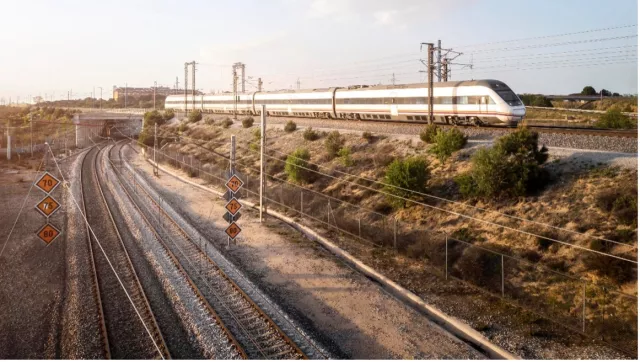
Rail infrastructure also relies on high-performance fiber-optic networks for communications, operations, and equipment monitoring. As experts in fiber optics since 1997, the Ineo Telecom Rail team supports railway infrastructure managers in the design, deployment, and maintenance of telecom networks tailored to the most demanding environments.
Whether you're a local government, a multi-site business, or a service provider: a partner to design, deploy, and maintain your fiber-optic networks
Our Fiber Optics Expertise by the Numbers
Our teams are deploying fiber-optic networks in rural areas as well as along rail lines, where they have been operating since 1997.
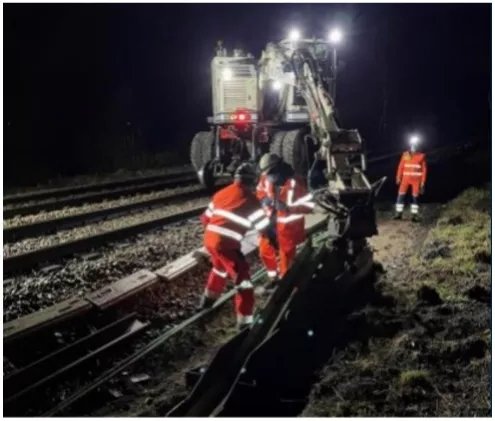
As partners in SNCF projects for over 20 years, our teams Ineo Telecom Rail lay, install, and connect fiber-optic cables along the tracks. Each project requires precise coordination with rail operations. Our teams also provide fiber-optic connectivity for telecom operators.
- Compiègne – Noyon (Oise), for SNCF: 30 km of fiber-optic cable laid and connected along the tracks, using a mechanized trenching tool developed by our teams.
- Peyraud (Ardèche), for SNCF: micro-fiber optic cable installed along active rail lines, by reusing an existing, tested, and repaired high-density polyethylene (HDPE) conduit.
This hands-on experience, gained project after project, informs our approach on all our fiber-optic projects, whether for businesses, local governments, or telecom operators.



Frequently Asked Questions About Fiber Optics
What is a dedicated fiber connection, and who is it for?
A dedicated fiber is a fiber-optic connection reserved for a single user or organization. It meets the needs of multi-site businesses, local governments, and infrastructure managers seeking high performance and enhanced availability. Unlike a shared fiber connection, which is used by multiple users, its capacity is not shared.
What is the difference between FTTH, FTTO, and shared fiber?
FTTH (Fiber To The Home) serves end users. FTTO (Fiber To The Office) relies on infrastructure dedicated to business use, with guaranteed symmetrical bandwidth. A shared fiber divides its capacity among multiple users, while a dedicated fiber reserves it for a single organization, for demanding business applications.
What is the fiber speed for businesses?
The bandwidth of a business fiber connection depends on the provider’s plan and the chosen architecture. A shared fiber connection (FTTH) divides its capacity among multiple users. A dedicated fiber connection (FTTO) offers guaranteed symmetrical bandwidth reserved for a single organization. The physical infrastructure we are building is designed to support the increasing bandwidth demands of your applications.
How is the fiber-optic connection work carried out?
A professional network connection project includes a design phase, civil engineering work, fiber-optic cable installation, followed by connection operations and network commissioning. Preventive and corrective maintenance then ensures the network’s long-term availability and supports its technological evolution.
What is a Public Initiative Network (RIP)?
This is a telecommunications network operated by a local government or a digital consortium in areas where private-sector initiatives are insufficient. It provides ultra-high-speed broadband to residents, businesses, and public services. Equans is involved in its design, deployment, expansion, and maintenance.
Which companies are installing fiber-optic internet?
Fiber-optic cables are installed by companies specializing in telecom infrastructure on behalf of carriers, local governments, or businesses. Equans is one such company: our teams design, build, and connect the physical infrastructure—from the initial planning phase through to fiber connection—and then maintain it. Connectivity, including speed and GTR commitments, is the responsibility of the telecom operator.
How much does a fiber-optic connection cost?
For a business site, the cost of a fiber connection depends on the work required: distance from the existing network, civil engineering, and the number of buildings to be served. Unlike residential plans, there is no single rate. Our engineering departments assess this during the preliminary study, before any work is committed to.
How long does it take to install a business fiber-optic connection?
The time required for a commercial utility connection depends on several factors: the complexity of the preliminary study, the scope of the civil engineering work, and site-specific constraints (urban, industrial, rural). Our engineering departments assess these parameters from the very start of the project to plan a realistic schedule and minimize unforeseen issues during the construction phase.

Talk to our fiber-optic experts
Whether you’re a multi-site company, a local government, or a service provider: do you need to connect your sites, interconnect your buildings, or deploy a fiber-optic network in your area? Our experts support you throughout the entire lifecycle of your infrastructure: design, deployment, operation, and maintenance. We build reliable, scalable networks tailored to your needs, whether it’s a dedicated fiber connection for a strategic site or an FTTH (Fiber To The Home) network covering an entire region. Let’s discuss your project: our teams will work with you to identify the most appropriate solution for your infrastructure.Talk to our fiber-optic experts
Whether you’re a multi-site company, a local government, or a service provider: do you need to connect your sites, interconnect your buildings, or deploy a fiber-optic network in your area? Our experts support you throughout the entire lifecycle of your infrastructure: design, deployment, operation, and maintenance. We build reliable, scalable networks tailored to your needs, whether it’s a dedicated fiber connection for a strategic site or an FTTH (Fiber To The Home) network covering an entire region. Let’s discuss your project: our teams will work with you to identify the most appropriate solution for your infrastructure.