News 2022-04-07
September 29, 2021
What is 5G?
A disruptive technology
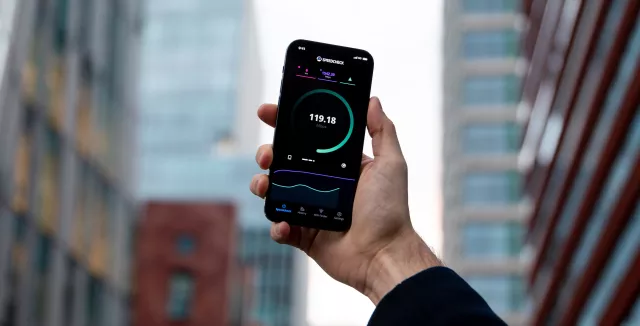
5G, as the name suggests, is the fifth generation of mobile networks. 5G should not be viewed as a mere evolution of 4G. It is, in fact, a disruptive technology.
Built on three pillars, it will first and foremost enable significantly higher data speeds, much lower latency, and the ability to support a greater number of devices. 5G will also eventually enable the development of applications that are entirely different from those of 4G, such as telemedicine, autonomous vehicles, and factory automation.
Uses of 5G
-
- Enhanced Mobile Broadband (eMBB)Significant increase in data rates (up to 2.1 Gb/s in the 3.5 GHz band).
-
-
- Massive Machine-Type Communications (mMTC)Smart homes and buildings, smart cities—all made possible by sensors.
-
-
- Ultra-reliable and low-latency communications (URLLC)3D/4K/8K video streaming, professional applications and cloud-based video games, augmented reality, industrial and transportation automation, autonomous vehicles
-

Why 5G?
5G technology will be a key component of the digital society. It will help address the sharp increase in traffic and the growing demand for high-bandwidth connectivity. It will also support a large number of connected devices and meet the real-time, high-reliability communication needs of mission-critical applications.
5G will provide wireless connectivity for a wide range of new applications and use cases, including wearable devices, smart homes, traffic safety and control, critical infrastructure, industrial processes, and ultra-high-speed media delivery. As a result, it will also accelerate the development of the Internet of Things.
The overall goal of 5G is to provide ubiquitous connectivity for any type of device and any type of application that can benefit from a connection. 5G networks will not be based on a specific radio access technology. Rather, 5G is a portfolio of access and connectivity solutions that meet the requirements of mobile communications beyond 2021.