
January 29, 2024
Toward a More Widespread Use of Hydrogen?
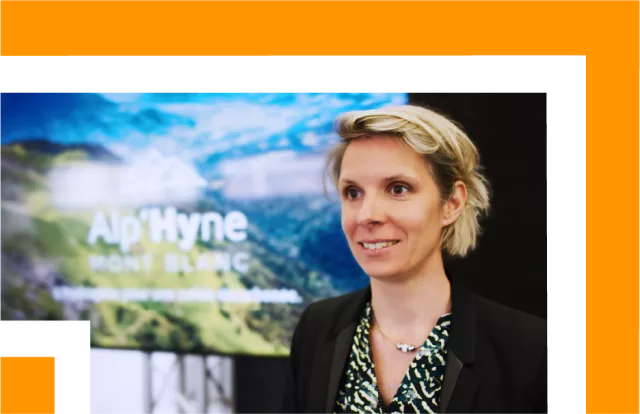
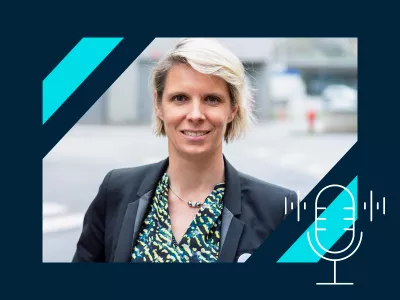
With the Hyvolution trade show—the must-attend annual event dedicated to hydrogen—fast approaching, there is plenty of news from the sector: from applications to safety and regulations. Equans France, a long-standing player in the industry, is building on its initial operational track record through the operation and maintenance of infrastructure and is continuing its expansion into the upstream phase with larger-scale projects. On this occasion, Gaëlle Walzer, Project Manager and hydrogen regulatory expert at Equans, provides an overview of the main challenges and obstacles facing this rapidly growing industry.
Why do we talk about the growing democratization of hydrogen?
The hydrogen market and industry are currently experiencing exponential growth, and it is important to provide the best possible support to local governments, industrial companies, and emerging players in the sector. Historically limited to industrial use—primarily as a byproduct or raw material in the chemical and fertilizer industries—the use of low-carbon hydrogen has expanded in recent years to other sectors, particularly mobility.

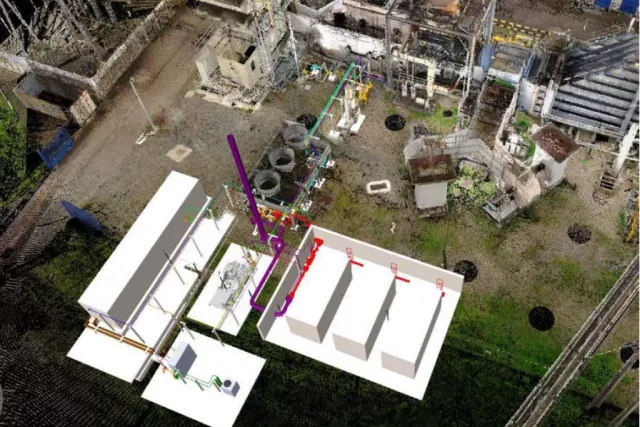
Hydrogen now powers fleets of buses, taxis, and trains, as well as company-owned fleets: freight transport, dump trucks for garbage collection, forklifts in logistics warehouses... Ideal for heavy-duty and high-intensity mobility projects (range, refueling speed, availability around the clock, power-to-size ratio, etc.), the deployment of low-carbon hydrogen production and distribution infrastructure is, for example, at the heart of the Alp’Hyne Mont Blanc project, which proposes a hydrogen ecosystem to decarbonize the Arve Valley and the Franco-Italian logistics corridor, a strategic corridor facing very heavy traffic and exposed to high levels of pollution and poor air quality.
As a true driver of decarbonization, low-carbon hydrogen—produced by water electrolysis using decarbonized or renewable electricity—can be stored, transported, and used at a later date as part of a long-term strategy. This explains the proliferation of its uses and the development of solutions tailored to the industrial and heavy-duty transportation sectors, as well as for synthetic molecule projects (e-methanol, e-kerosene), as well as for electro-hydrogen power generators that supply energy to remote construction sites or serve as backup power in data centers.
How are these new practices disrupting the existing framework, and what changes are on the horizon?
Until now, in the industrial sector, hydrogen has been used at controlled sites with high safety standards. The big change is that, as hydrogen becomes more widely available, it is moving from a closed environment to one where it is present at sites accessible to the public. What’s more, its users are no longer limited to expert industrial professionals, who are well-versed in the various risks associated with the molecule—did you know, for example, that it was prohibited in certain areas of industrial sites, known as ATEX zones and characterized by very specific requirements, such as zipping up your jacket? —but rather a taxi or bus driver. The challenge, therefore, is to provide an additional layer of oversight to ensure that hydrogen can continue to be used safely in these new applications.
The growth observed across all sectors requires rapid responses to additional considerations such as fire protection and the reliability of installations to prevent leaks from electrolyzers, while raising awareness about managing risks related to explosiveness, flammability, and high pressure—all of which are well-understood and fully controlled. This requires an evolution of regulations, to be developed collaboratively and clarified on a case-by-case basis with the DREAL and local authorities to account for these new uses. These measures will help accelerate the development of new applications by ensuring complete safety, both in terms of equipment design and operation.
Working directly with government agencies, France Hydrogène—of which Equans is a member—is currently working on a project to update the ICPE (Classified Environmental Protection Facilities) categories, such as standard 14.16, which applies whenever the daily quantity of hydrogen distributed is greater than or equal to 2 kg and is expected to be updated by the end of 2024.
How can we support new players in the hydrogen sector?
It is important to remember that hydrogen is neither a miracle solution nor a one-size-fits-all solution. Hydrogen encompasses a range of uses and applications that must be communicated to all relevant stakeholders. Drawing on its experience and expertise, Equans is now able to support local governments and industrial companies throughout the entire lifecycle of a project: from design to maintenance, including installation (piping, electrical work, safety and security systems), consulting, and project implementation.
Among its recent projects, Equans has developed Hyvision, an energy supply solution using low-carbon hydrogen produced by electrolysis. As a comprehensive service offering that facilitates the interface between hydrogen storage and hydrogen-powered generators, this innovation perfectly meets the electricity needs of mobile or remote sites in sectors such as events, construction sites, and telecommunications—for example, most recently at the Solidays festivals, or at off-grid sites like cell phone relay towers or civil aviation antennas. As a sustainable alternative to diesel generators, it reduces CO2 emissions by 70% and cuts noise levels around the facilities by a factor of 10. The solution also offers a real-time monitoring system that measures generator consumption and anticipates the need for recharging, in addition to detecting even the slightest leaks so that action can be taken as quickly as possible.
We have the capacity to work on numerous projects to develop synergies through a shared vision and a proven methodology. The coming years will be crucial for realizing hydrogen’s full potential, supporting emerging players in their decarbonization strategies, and successfully achieving the triple transition—energy, industrial, and digital.


Do you have a need? Let's talk about it!
Do you have a need? Let's talk about it!
