

Green Electricity: Connecting Renewable Energy Sources to the Grid
Solar power plants, wind farms, hydroelectric facilities: Equans connects your renewable electricity generation to the grid.Green Electricity: Connecting Renewable Energy Sources to the Grid
Solar power plants, wind farms, hydroelectric facilities: Equans connects your renewable electricity generation to the grid.
Green electricity is generated from renewable sources: the sun, wind, or water. To supply power to local communities, each generation facility must be connected to the public power grid. Equans neither generates nor supplies electricity: we handle the connection of renewable energy sources (RES) to the grid.
Our Ineo teams connect solar power plants, wind farms, and hydroelectric facilities to the grid. They draw on our expertise in electric grids and our network of more than 150 locations across France. This service complements our grid solutions for connected regions.
Are you planning to connect a solar power plant, a wind farm, or a hydroelectric facility?
Connecting renewable energy sources: a key step in every project
A renewable electricity generation facility only generates value once it is connected to the public grid. The connection links it to the distribution or transmission grid. It determines the project’s timeline, its cost, and the safety of power injection.
The energy transition is accelerating the development of renewable energy. The multi-year energy plan (PPE) sets targets for the coming years. Each new project must find its place within a grid that balances electricity generation and consumption at all times.
The connection process begins with an application submitted to Enedis, a local distribution company, or RTE. The operator reviews the connection requests and prepares a technical and financial proposal. The work can then be contracted out to specialized companies such as Equans.
Connection, extension, hookup: What do these terms mean?
Three key concepts form the basis of a hookup procedure:
- A connection links the installation to the existing public grid, up to the delivery point.
- An extension involves creating new infrastructure within the same voltage class when the existing grid is insufficient.
- The connection comprises the branch line and, if necessary, the extension.
BT, HV or VHV: A Connection Based on Power
The voltage range depends on the installed power at each connection point to the public grid. Up to 250 kVA, generation is connected at low voltage (LV). Above that, it is connected via HTA (high voltage A, or medium voltage), up to 12 MW, or even 17 MW with a special exemption.
Higher-capacity installations are connected via HTB (high voltage B) to the transmission grid. These connections and the source substations are part of our energy infrastructure. Distribution via high-voltage A (HTA) and low-voltage (BT) networks is described on our electric power grids page.
- LV: up to 250 kVA per connection point, on the distribution network.
- HTA: from 250 kVA to 12 MW (17 MW with special permission), on the distribution network.
- Extra-High Voltage (HTB): above 12 MW, or 17 MW with a waiver, on the transmission grid.
The delivery substation, the interface between the facility and the grid
In high-voltage systems, the generated power is fed into the public grid via a delivery substation. This substation marks the property boundary between the producer’s facility and the distribution grid. It houses the general protection system, the decoupling protection system, and the metering system for injected energy.
The decoupling protection automatically disconnects the facility from the grid in the event of a fault. It protects the grid infrastructure and the crews working on the grid. The high-voltage delivery substation therefore remains central to any project connected at medium voltage.

Our grid-connection solutions for renewable energy systems
Our expertise in electrical grids enables us to connect renewable energy sources. We carry out the work required to connect your facilities to the public grid. This work includes trenching, laying high-voltage (HV) or low-voltage (LV) cables, and connecting to existing infrastructure. Each project is tailored to the amount of renewable energy to be fed into the grid and the specific constraints of the site.
We work with grid operators, renewable energy producers, project developers, and local governments. Everyone can count on us as a partner to integrate their energy production into the power grid.
Connecting Photovoltaic Power Plants
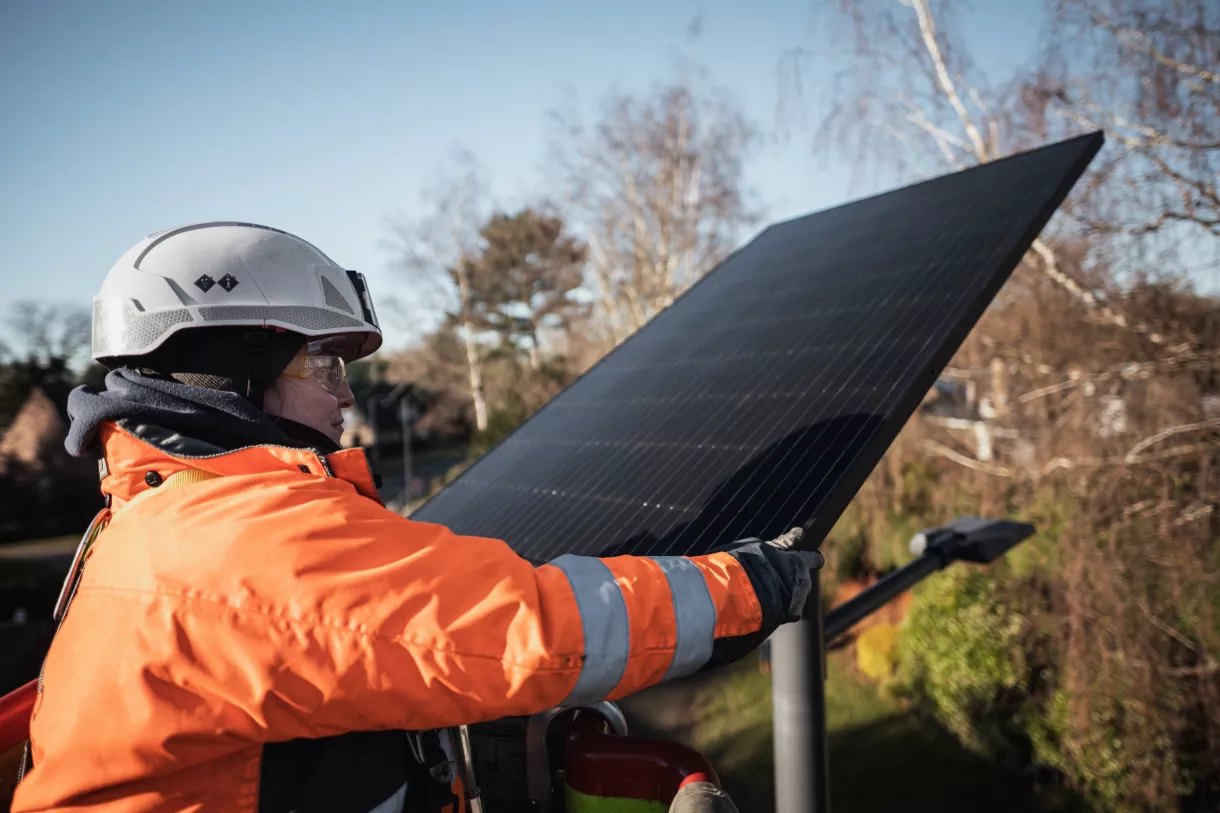
A ground-mounted photovoltaic power plant or a photovoltaic farm feeds its generated electricity into the public grid. Depending on its capacity, the photovoltaic connection is made at low voltage (LV) or high voltage (HV) via a delivery substation. We handle the connections to the public distribution grid.
Our role here focuses on the photovoltaic connection. For rooftop or ground-mounted installations, discover our photovoltaic solutions for buildings.
Connecting Wind Farms
An onshore wind farm consists of several wind turbines, whose output varies with wind speed. This electricity is collected on-site and then transmitted to the public grid via a delivery substation. We carry out the work to connect the wind farm to the grid.
The most powerful wind farms are connected to the transmission grid via the extra-high-voltage (EHV) network. These connections, like those for offshore wind farms, are part of our energy infrastructure.
Connecting Hydroelectric Facilities
Small-scale hydroelectric power harnesses the energy of waterways as close as possible to local communities. Its output depends on flow rate and must also be fed into the public grid. We connect these facilities to the low-voltage (LV) or high-voltage (HV) grid, depending on their capacity.
Solar, wind, and hydroelectric power: Let’s work together to connect your facilities
S3REnR, allocation, and capacity: the framework for connection
The development of renewable energy relies on grid planning on a region-by-region basis. Three key factors guide each renewable energy project: the S3REnR, its allocation, and capacity data.
- S3REnR: regional grid capacity; available on the RTE website and from regional government offices.
- Allocation: shared financing of infrastructure to be built; available in the region’s S3REnR and in the technical and financial proposal.
- Caparéseau: capacity, station by station; available on the Caparéseau website and on the Enedis map.
The Regional Renewable Energy Grid Connection Plan
The S3REnR, Regional Renewable Energy Grid Connection Plan, coordinates the integration of renewable energy sources in each region. It was established by Law No. 2010-788 of July 12, 2010, known as Grenelle II.
It is developed by RTE in collaboration with distribution system operators and then approved by the regional prefect. It reserves grid capacity for renewable energy sources and identifies the infrastructure to be built or upgraded.
The S3REnR contribution
The S3REnR contribution pools the cost of infrastructure to be built among renewable energy project developers. Facilities with a capacity of more than 250 kVA pay this contribution in addition to the costs of their own connection. The amount is set for each region and is specified in the S3REnR documents.
Caparéseau: View grid capacity
Published by RTE, the Caparéseau website shows the capacity of each source substation. It shows the renewable energy capacity already connected and the reserved capacity still available for allocation. It also lists projects in the queue that are currently being connected.
On the distribution grid, Enedis also offers a capacity map and a connection simulator. This data affects the costs and timelines for your connection. Our teams take this into account from the very start of your project.

Our Electric Vehicle Charging Solutions
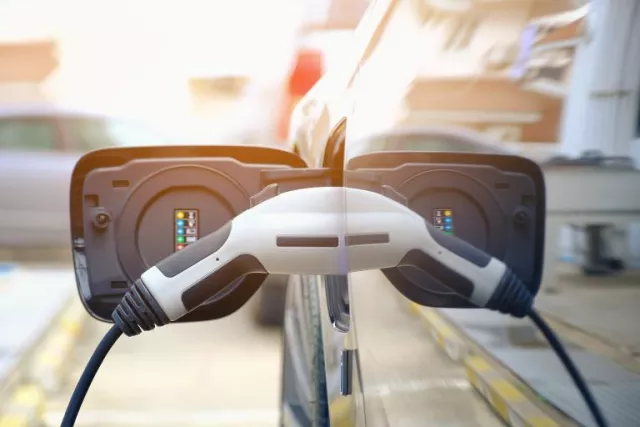
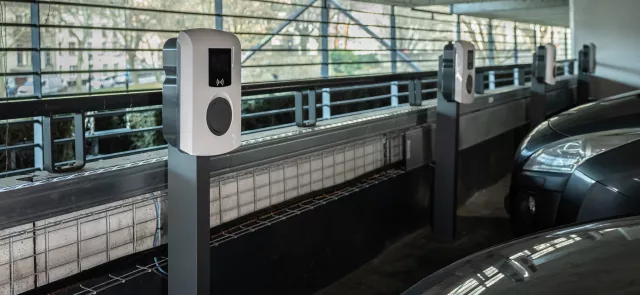
Our expertise in electrical networks also enables us to deploy electric vehicle charging infrastructure (EVCI). The electrification of transportation is creating new power demands for regions and businesses. Discover our charging solutions, from design to commissioning.
Operating and Maintaining Your Connection Facilities
A connection structure must remain operational throughout the entire lifespan of your power generation facility. Our Ineo teams provide maintenance for the structures we build to minimize interruptions in power delivery to the grid.
Our maintenance services include:
- Preventive maintenance, to anticipate equipment wear and tear.
- Corrective maintenance to restore a facility to service after a failure.
- Support for operators, to ensure the safety of day-to-day operations.
Connection, maintenance: a single point of contact for your renewable energy systems
Connecting photovoltaic, wind, and hydroelectric facilities, as well as charging infrastructure: check out our latest news on green electricity.


Frequently Asked Questions About Connecting Renewable Energy Sources
What is the difference between a connection and a hookup?
The connection links your facility to the existing public grid, up to the delivery point. The connection is broader in scope: it includes the service line and, if necessary, an extension of the grid. The extension involves the construction of new infrastructure when the existing grid is insufficient. The grid operator specifies the chosen solution in its technical and financial proposal.
What are the different types of connections?
The type of connection depends on the installed capacity per connection point. For capacities up to 250 kVA, the generation system is connected at low voltage (LV). Up to 12 MW—or even 17 MW with a special exemption—it is connected to the high-voltage distribution (HVD) grid via a delivery substation. Above that, the connection is made to the high-voltage transmission (HVT) grid, which is operated by RTE.
How much does it cost to connect to the utility networks?
Connection costs and timelines depend on the system’s capacity and the distance to the grid. They also vary depending on the connection or expansion work required. For capacities exceeding 250 kVA, connection fees also include the S3REnR contribution, which is set for each region. The grid operator quantifies these elements in its technical and financial proposal. The delivery point, which is owned by the producer, is covered by the facility’s budget.
What are the main types of renewable energy?
The main renewable energy sources used to generate electricity are hydropower, wind power, solar photovoltaics, and bioenergy. Others, such as geothermal energy and solar thermal energy, primarily produce heat. To feed their output into the grid, these facilities must be connected to the grid. We provide grid connection services for photovoltaic, wind, and hydroelectric facilities.
What is a high-voltage delivery substation?
The high-voltage delivery substation connects a generation facility to the public medium-voltage distribution grid. It marks the property boundary between the generator’s facility and the grid. It houses the general protection system, the decoupling protection system, and the metering equipment. The decoupling protection automatically disconnects the facility from the grid in the event of a fault.
What is an S3REnR?
The S3REnR is the regional plan for connecting renewable energy sources to the grid. Established by the Grenelle II Act of 2010, it is developed by RTE in collaboration with distribution system operators. The regional prefect approves it. It reserves capacity for renewable energy and plans the infrastructure to be built or upgraded. The contribution, paid by producers, pools the cost of the infrastructure to be built.
How can I find out the network's capacity?
Published by RTE, the Caparéseau website provides a breakdown, by substation, of the grid’s capacity for generation facilities. It distinguishes between capacity reserved under the S3REnR program and capacity that is still available. This information helps you prepare your application and choose a connection point. The grid operator then confirms the solution when reviewing your application.

Talk to our green energy experts
Are you preparing to connect a solar power plant, a wind farm, or a hydroelectric facility? Whether you’re a grid operator, power producer, developer, or local government, our teams will build and maintain your connection infrastructure. Let’s discuss your project.Talk to our green energy experts
Are you preparing to connect a solar power plant, a wind farm, or a hydroelectric facility? Whether you’re a grid operator, power producer, developer, or local government, our teams will build and maintain your connection infrastructure. Let’s discuss your project.