
Low-Carbon Hydrogen: The Energy of the Future

Focus on Hydrogen
By Caroline Mazzoleni,
Head of Hydrogen Operations at Equans

Low-carbon hydrogen: an energy source with multiple uses
For the past decade or so, a surprising energy source has been a recurring topic in discussions about the future of energy. It’s low-carbon hydrogen, also known as renewable or green hydrogen. By the way, what is hydrogen, and how is it produced? To find out, we’re meeting with Caroline, who heads up hydrogen operations at Equans.
What is hydrogen, and how is it produced?
Hydrogen is an energy carrier that can be produced in various ways from fossil fuels. Most often, but also from renewable or low-carbon energy sources, and specifically through water electrolysis.
It’s very simple: you take H₂O water molecules, pass an electric current through them, and split these water molecules to recover, on one side, hydrogen gas—which is an energy carrier used to decarbonize various activities—and, on the other side, oxygen.
The potential of hydrogen has been immense for years now, and Equans has embraced this topic, particularly in the context of industrial transformation. How did this solution come about at Equans?
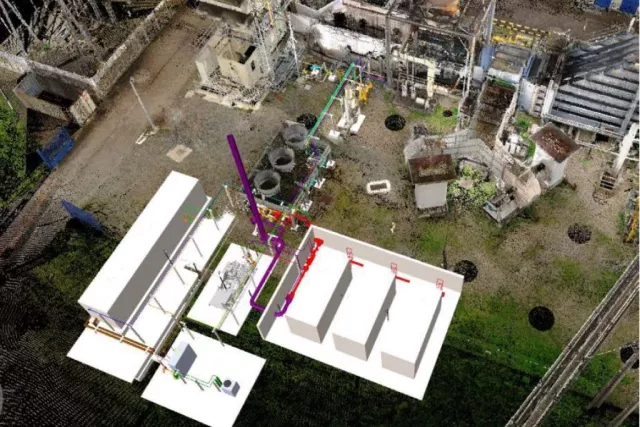
At Equans, we are committed to positioning ourselves as a leader in the energy transition. As such, Equans supports its clients in transitioning their operations—particularly by helping them reinvent and ensure the industry’s long-term viability through innovative solutions.
Hydrogen is an energy carrier that will enable industry to find the low-carbon solutions essential to the long-term viability of their operations. We want to support our clients with these solutions and deploy them for their benefit as quickly as possible. This is how Equans’ hydrogen business was born, driven by the desire to build on the Bouygues Group’s long-standing position in renewable energy production, particularly solar and wind power.
Whether in the transportation sector, industry, or energy production, does hydrogen offer promising solutions to address climate challenges?
I was quite surprised by how quickly people are adapting to this new energy source. It also requires adapting an entire regulatory and safety framework because we’re dealing with a form of energy that has historically been used in industry—with a framework and people who were trained and experienced in that type of use— and now, being able to refuel a hydrogen vehicle has required evolving how these vehicles are used. I’m quite fascinated by the industry’s overall ability to adapt, and this requires us all to work together with an ecosystem of partners dedicated to the emergence of this sector—and I’m quite fascinated by that.
Maurice Blondel said, "The future cannot be predicted; it must be prepared for."

How can low-carbon hydrogen production help decarbonize industry, and what are its other potential uses, such as in heavy-duty vehicle fleets and for storing surplus renewable electricity?
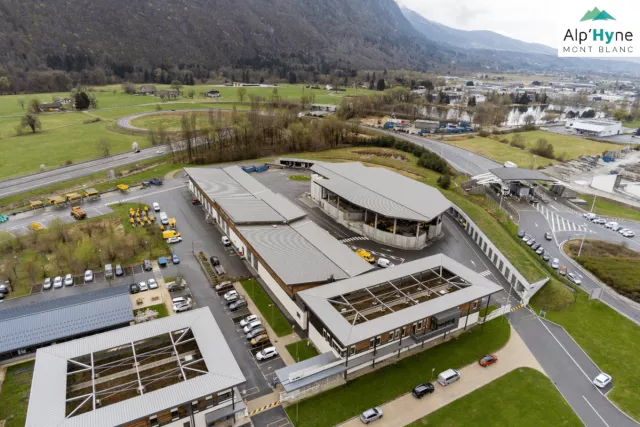
Hydrogen is used to decarbonize sectors such as industry and transportation, but also serves as a flexibility tool to offset the intermittency of renewable energy.
In fact, today there is a growing effort to integrate renewable energy into the energy mix. The problem with these renewable energy sources is that they are intermittent. The challenge, therefore, is storing them. And they cannot be stored in batteries because batteries are designed for short-term storage.
Hydrogen can be used as a long-term energy storage medium, so it can be stored for very long periods—weeks or months—without energy loss and then released through what are called hydrogen fuel cells to be reused as needed.
Will our trucks, buses, and maybe even our airplanes and boats run on hydrogen in the future?
Hydrogen is seen as a means of decarbonization for mobility in general—and thus primarily for large vehicles—for which battery-powered vehicles are not suitable due to the power requirements.
We’re talking about trucks and buses, but also other types of transportation that need to be decarbonized. This is the case, for example, with maritime transport, but also with aviation, which cannot use gaseous hydrogen for simple reasons related to maintaining gaseous hydrogen in the atmosphere at high altitudes and due to weight considerations as well. Instead, hydrogen derivatives such as e-kerosene are used to produce e-fuels and alternative fuels.

In the agricultural sector, Equans is working with the Dordogne on a particularly innovative project to convert agricultural waste into synthetic methane—a gas used to heat our buildings. Can you tell us more about it?

The Dordogne is a fairly rural department that was committed to deploying a hydrogen production and distribution infrastructure for various uses.
The Dordogne already has numerous biogas plants. Agricultural waste is broken down to produce biogas (about 60%) as well as CO2. Until now, this CO2 has not been utilized, so the idea arose for a highly innovative project to combine this CO2 with hydrogen to produce synthetic methane and feed it back into the grid.
It covers all the applications for which natural gas is distributed through France’s distribution networks, including heating.
Equans is working with a major European port to accommodate future hydrogen-powered ships
As we can see, hydrogen is intended for use in fairly specific industrial sectors that require a great deal of energy, such as steelmaking, fertilizer production, glass manufacturing, and paper production; however, we must also consider the supply of hydrogen for maritime applications.
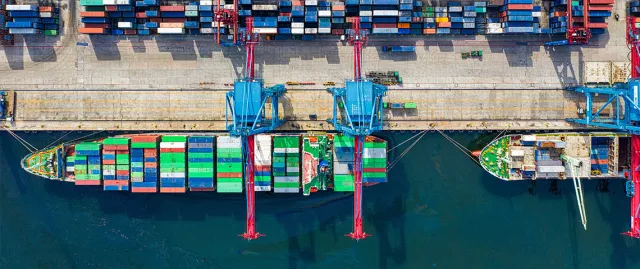
With the ongoing goal of decarbonizing activities—particularly mobility— Axima, a brand of Equans, has taken on a project to decarbonize river transportation, specifically at a major European seaport, where the goal is to design and install infrastructure to refuel vessels that will navigate various rivers.
A grant application for this project has been submitted at the European level, making it one of the pioneering projects in the decarbonization of river transportation.

Could we even imagine a hydrogen-powered rocket?
That’s already the case today. In the aerospace industry, liquid hydrogen is used extensively. It is therefore largely thanks to these cutting-edge technologies—such as space rockets—that we will be able to find competitive alternative solutions that can be applied to everyday sectors like aviation and maritime transport.

Did you know that hydrogen can even be used as fertilizer?
Fertilizers are currently produced using fossil fuels and chemicals. Here, we’re talking about producing fertilizers from hydrogen derivatives—and thus decarbonizing various sectors, particularly agriculture. These fertilizers will be the fertilizers of the future, since they will be produced using low-carbon energy.

Hydrogen at the Rolling Stones concert in Paris
Today, there are a significant number of diesel generators in use across various sectors. Hydrogen is ultimately an energy carrier that makes it possible to replace diesel with hydrogen-powered generators.
We’ve identified situations where it made sense to use them because of their favorable carbon footprint, particularly for intensive use at events.
For example, last summer at the Longchamp racetrack, the Solidays festival, and the Rolling Stones concert, we powered the events using hydrogen-electric generators and low-carbon hydrogen. The CO2 emission savings are extremely significant. These are extremely reliable solutions that can be replicated at sports events our construction sites, as well as at remote locations not connected to the grid.

Do you have a need? Let's talk about it.
Do you have a need? Let's talk about it.
