Stepping on the gas on the electric highway

The urgent need to decarbonize road transportation is now mobilizing all stakeholders to identify and test the best technologies, combining environmental and economic benefits. The sector’s transition to sustainability is at the heart of numerous innovations, including dynamic in-transit charging systems.
An in-depth look with Pascal Gessat, Director of Transportation at Equans France.

What are the challenges associated with the ERS (Electric Road System) or electric roads?

In France, 9% of CO2 emissions come from road freight, according to a study published by The Shift Project in 2022.
While the European Commission’s “Fit for 55” plan and the National Low-Carbon Strategy adopted by France are intended to help achieve the goal of carbon neutrality by 2050, road freight transport represents a major lever for decarbonization. The transition from internal combustion engines to electric power for trucks poses significant challenges due to expensive, heavy, and bulky batteries, which reduce vehicle payload capacity and increase transportation costs.
Furthermore, their manufacturing results in a significant carbon footprint and requires a massive supply of metals such as lithium, cobalt, and nickel...
The principle behind ERS is simple: it allows trucks to draw electricity from sections of the highway, enabling them to move forward while recharging their batteries. Traffic is concentrated on certain road routes. Therefore, equipping just a small portion of the network is enough to bring about a very significant reduction in emissions. In Germany, initial tests show that equipping 3% of the network can decarbonize road freight by 60%. Given its effectiveness, this approach therefore opens up major opportunities.
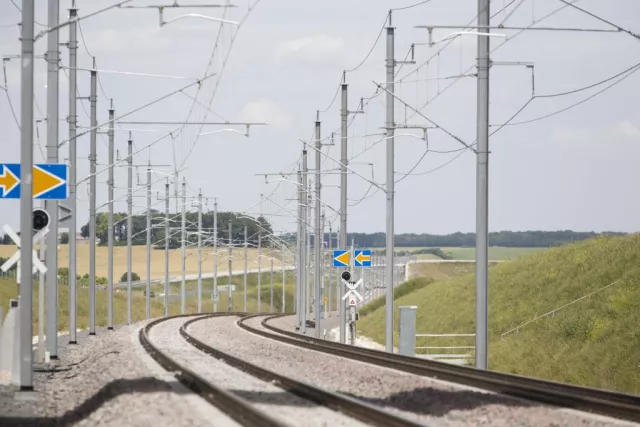
Several technologies currently exist for electrifying the network: overhead wires, rails, or induction systems embedded in the road surface. Trials already underway in some European countries—and set to continue in France over the coming months—should help test the system’s robustness and establish an administrative framework prior to its deployment.
The success of the mobility transition requires leveraging another strategic factor: the infrastructure itself. With electricity consumption growing rapidly, power demands on a limited grid will need to be managed or smoothed out. Allowing heavy-duty trucks to access power while on the road makes it possible to spread out energy distribution over time, thereby avoiding a concentration of charging at stations during fixed hours and during fast-charging sessions.
How do you choose a specific technology?
A mix of technologies will likely be needed to meet different needs. However, not all of these technologies are equally mature, and decarbonizing road transportation must become a priority. In fact, the use of overhead wires offers many advantages today. It is a mature technology already in use on a variety of road vehicles, such as trams and buses.
These vehicles are similar in characteristics to heavy-duty trucks. Equipping trucks with a pantograph to collect electricity does not entail unreasonable additional costs. And since electricity can be collected very efficiently while driving, it is possible to meet the energy needs not only for propulsion but also for recharging the batteries. Thus, when leaving the electric highway, trucks can continue driving using their batteries and decarbonize road transport all the way to the so-called “last mile,” in the heart of cities and business districts.
From an operational standpoint, catenary technology derived from the rail sector benefits from a long history of experience, particularly thanks to France’s industrial base. While the maturity of this technology is evident, the issue of interoperability across borders and harmonization within the European Union is a challenge that must be addressed collectively.
What are the prospects for the deployment of electric roads in France?
The targets set for reducing our emissions by 2030 and then by 2050 require us to act quickly. The research and development phases have now been validated, and we are currently in the full-scale testing phase. Germany, Sweden, Belgium, and the United Kingdom are beginning to deploy the first sections. In France, the deployment of the first overhead wires is imminent. A government-led call for projects is currently underway and is expected to deliver its conclusions by 2025 following an open-road testing phase.
Drawing on its expertise and know-how, Equans is involved in consortia that bring together various public and private stakeholders, particularly heavy-duty truck manufacturers. Our experts are working on proven business models to make this a success. Because road hauliers’ profit margins are slim, the economic aspect is obviously key: the cost of dynamic charging must not exceed that of current energy sources. All economic factors must be taken into account: truck purchase, fuel, insurance, maintenance... And this trend is reinforced by the international context. But forecasting models confirm the sector’s potential for profitability.
Beyond the technological and financial aspects, the development of these electric highways could be accelerated by the immediate availability of land. While the construction of nuclear power plants and solar and wind farms requires land use changes—particularly affecting agricultural land—electric highways already exist and offer facilities that are already in place. This advantage could help accelerate their rapid deployment.