
July 7, 2023
NAVINEO: Shaping the Future of Transportation
To understand trends in public transportation and anticipate travelers’ expectations regarding the future of travel, Ineo Systrans, a subsidiary of Equans France and an expert in Operations Support and Passenger Information Systems (SAEIV), conducted a study in several cities across France.
As part of this survey, 713 people were polled in Rouen, Le Havre, Reims, Paris, and the Paris metropolitan area.
When asked about travelers’ expectations regarding public transportation, efficiency emerged as the top priority in the responses of 67% of those surveyed, while comfort was mentioned by nearly half (49%). These results provide insight into travelers’ expectations and allow us to anticipate them in order to offer more efficient and attractive transportation options, especially since other studies have shown similar trends.
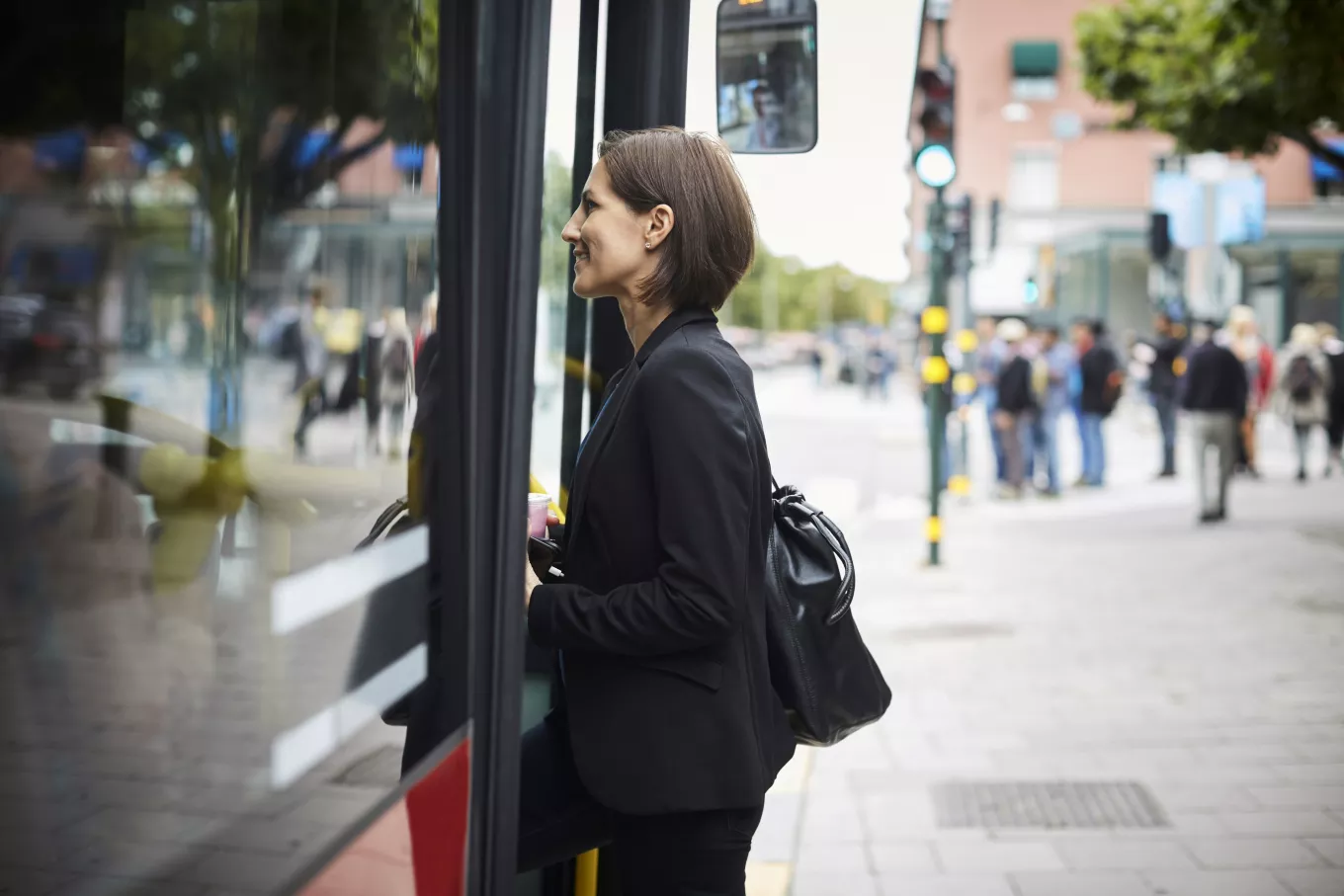
We also need to convince non-users (who make up 18%) who believe that traveling by car is faster, more efficient, and more comfortable than traveling by public transit.
The stakes are high for the climate, since we know that modernizing urban transportation systems could cut annual greenhouse gas emissions from this sector in half. That is, a reduction of approximately 170 million metric tons of CO2e by 2050—nearly 6% of the total emissions reductions needed to stay within our “carbon budget”*.
When it comes to the future of travel, respondents express the same needs—with the added element of innovation.
At Equans, we recognize these needs and place innovation at the heart of our offerings to support our clients, transportation networks, and local governments. We make public transportation more attractive, seamless, resilient, and connected… through Operations Support Systems (OSS) technologies, data analytics tools, and onboard connectivity. We enhance the passenger experience and optimize operations and maintenance for ever-greater efficiency.
Public transit must become an integral part of our lifestyles, and to do so, it must offer comfort, safety, and services. It then takes its rightful place alongside other modes of transportation related to the so-called “last mile” (walking, biking, etc.). By becoming efficient and integrating into multimodal systems, it becomes an attractive alternative to private vehicle use—which today is still largely polluting and will continue to be the primary cause of urban congestion in the future.
The challenge lies in going further and faster in developing our systems and fostering innovation to make clean and efficient public transportation the norm.
*Decardonizeeurope.org.